
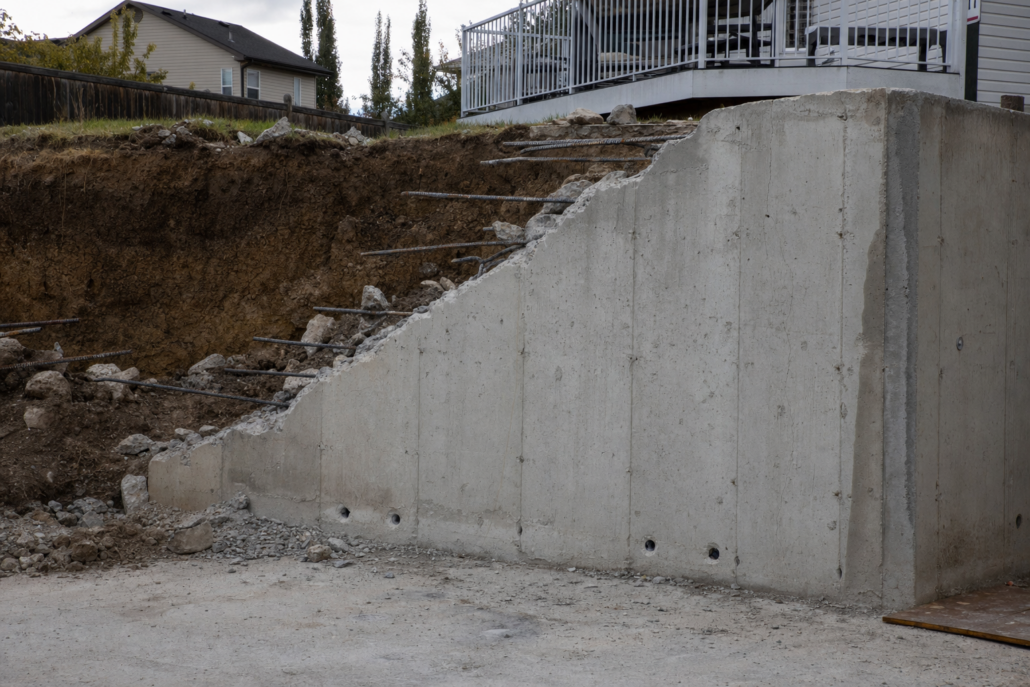
Concrete removal time Calgary can change a lot when the project is a retaining wall instead of a flat slab, because the wall may be holding back soil, water, and nearby structures. If you are planning concrete removal with White Knight Contracting, it helps to know why retaining walls need a slower, safer plan than a driveway, patio, or garage pad. A slab usually sits on the ground. A retaining wall, however, works more like a brace. It may support a yard, fence, walkway, driveway edge, or even part of a building’s landscaping. That is why crews must think about access, drainage, soil pressure, permits, and cleanup before the first cut is made.
Table of Contents
- History of Concrete Retaining Walls in Calgary
- Concrete removal time Calgary: Why Walls Take Longer
- Current Trends in Retaining Wall Demolition
- Challenges with Concrete Wall Removal Calgary
- Retaining Wall Cost: What Changes the Price?
- Company Highlight
- Future Prospects: What to Expect Next
- FAQ
- Q&A
- Conclusion
History of Concrete Retaining Walls in Calgary
Concrete retaining walls became common in Calgary as neighbourhoods grew into sloped areas and tighter lots. Many homes needed more usable yard space, so builders used walls to hold soil in place and create flat outdoor areas. In older communities, some walls were poured concrete. In newer areas, you may also see concrete blocks, reinforced walls, and walls with tiebacks or drainage stone behind them. A tieback is a support that helps anchor a wall into the ground behind it.
Calgary’s freeze-thaw weather also shaped how these walls were built. Water can get behind the wall, freeze, expand, and push against the concrete. Over time, that pressure may cause cracks, leaning, or bowing. This is one reason retaining wall demolition is not the same as breaking up a sidewalk. A failing wall may look simple from the front, but the real issue is often hidden behind it in the soil, drain pipe, or backfill.
Concrete removal time Calgary: Why Walls Take Longer
Concrete removal time Calgary depends on size, thickness, access, rebar, disposal needs, and whether the wall is still holding back soil. A small slab can often be cut, broken, loaded, and hauled away in a more direct process. A retaining wall usually needs staged removal, which means taking it down in sections instead of all at once. This lowers the chance of soil spilling forward or nearby ground shifting suddenly.
Think of a retaining wall like the side of a bookshelf holding heavy books upright. If you remove the side too quickly, the books fall over. In the same way, soil behind a wall may move if crews remove the concrete without planning. For example, a backyard wall beside a fence may need temporary bracing before demolition starts. If there is a garden bed, gas line, drain line, or neighbour’s property close by, the project timeline can grow even more.
Current Trends in Retaining Wall Demolition
Modern concrete wall removal Calgary projects are more planned than they used to be. Contractors now often use smaller machines, compact loaders, concrete saws, and dust control tools instead of only heavy breakers. This helps in tight Calgary yards where access is limited by fences, garages, and narrow side paths. It also helps reduce damage to nearby landscaping.
Another trend is separating materials for disposal. Concrete is very heavy, with typical normal-weight concrete around 2,300 to 2,400 kilograms per cubic metre. That means even a short wall can create a large hauling load. Rebar, which is steel reinforcement inside concrete, may also need to be cut and sorted. In many cases, clean concrete can be taken to recycling facilities, where it may be crushed and reused as base material for roads or construction projects.
Homeowners are also asking more questions about drainage. That is a good thing. A removed retaining wall often reveals poor drainage, clogged weeping tile, or soil that was placed incorrectly. Fixing those issues during the replacement stage can help prevent future wall failure.
Challenges with Concrete Wall Removal Calgary
The biggest challenge with concrete wall removal Calgary is that the wall has a job. It is not just sitting there. It may be resisting sideways soil pressure, water pressure, and frost movement. If crews ignore that, removal can become unsafe. This is why planning matters before any machine touches the concrete.
Access is another major issue. A front driveway slab may be easy to reach with equipment, but a retaining wall in a backyard may require hand work or smaller tools. Narrow gates, stairs, mature trees, and overhead wires can slow the job. Noise and dust control also matter in residential areas. Crews may use wet cutting, careful breaking patterns, and scheduled work times to reduce disruption.
There is also the question of what happens after removal. If the wall was holding back a raised yard, you may need a new wall, grading work, slope repair, or erosion control. Grading means shaping the ground so water drains away safely. Without this step, rainwater can wash soil into sidewalks, alleys, window wells, or neighbouring yards.
Retaining Wall Cost: What Changes the Price?
Retaining wall cost is affected by more than the amount of concrete you can see. Wall height, length, thickness, rebar, machine access, soil removal, disposal fees, and permit needs all play a role. A low garden wall may be simple, while a tall reinforced wall beside a driveway can be much more involved. If the wall supports a load, such as parked vehicles or a raised patio, the removal plan may need extra review.
For a real-world example, imagine two walls that are both 20 feet long. One is 2 feet high and easy to reach from a back lane. The other is 5 feet high, reinforced with steel, and located behind a house with only a small side gate. The second project will usually take more labour, more cutting, more hauling, and more safety planning. So even when the wall length is the same, the price can be very different.
To keep costs under control, homeowners should gather basic details before requesting a quote. Helpful information includes wall height, wall length, photos, access points, visible cracks, nearby fences, drainage outlets, and whether the wall is leaning. These details help the contractor estimate equipment needs and project timing more accurately.
Company Highlight
Since 2011, this Calgary team has helped homeowners with exterior and concrete-related work that often connects to bigger property repairs. One strength is that they can handle many parts of a project, including siding, without needing a second contractor for every related task. That matters because retaining wall work can sometimes affect nearby exterior finishes, drainage areas, steps, fencing, or other parts of the home.
Their broader experience with roofing, siding, eavestroughs, soffit repairs, and hail damage work also helps them look at the full property, not just one broken piece of concrete. For homeowners, that can mean fewer delays and clearer communication. Instead of trying to coordinate several separate companies, you can often get a more complete plan from one team. That is especially helpful when demolition, cleanup, drainage, and exterior repairs overlap.
Future Prospects: What to Expect Next
In the future, retaining wall demolition will likely become even more careful and data-driven. More homeowners are becoming aware of drainage, soil movement, and permit rules. At the same time, cities are paying closer attention to stormwater management and safe construction near property lines. This means retaining walls may receive more review before removal or replacement.
You can also expect more use of compact equipment and better recycling. Smaller machines help crews work in tight spaces with less impact on yards. Better recycling keeps heavy concrete out of landfills and supports reuse in base materials. For homeowners, the best approach is to plan early. Before removing a wall, ask what it supports, where water goes, whether permits are needed, and what the finished grade will look like after demolition.
FAQ
Unlike regular slab removal, concrete retaining wall removal requires extra planning because the wall may be holding back lateral soil and water pressures, which can affect excavation safety and demolition sequencing.
Q&A
Question
Why is removing a retaining wall different from standard slab removal in Calgary?
Answer
Retaining walls involve structural load, drainage systems, and soil pressure, making removal more complex and potentially requiring engineering review. A slab is usually flat on the ground, while a retaining wall may be stopping soil from moving. That means crews may need to remove it in stages, watch for drainage problems, and protect nearby areas during the work.
Question
Do you need an engineer or permit to remove a retaining wall in Calgary?
Answer
Retaining walls over 1 metre in height in Calgary typically require a permit and may need a structural engineer’s sign-off before removal begins. Smaller walls may still need careful review if they support a driveway, slope, fence, walkway, or nearby structure. When in doubt, it is smart to check permit rules before starting the project.
To learn more and view our other blogs, click here,
Conclusion
Removing a concrete retaining wall in Calgary is different from regular slab removal because the wall may be part of a larger support and drainage system. Concrete removal time Calgary can increase when crews must manage soil pressure, rebar, access limits, hauling weight, permits, and safe sequencing. However, with the right planning, the process can be handled in a cleaner and safer way. Start by checking the wall height, taking photos, noting drainage issues, and asking whether engineering or permits may apply. Then, choose a contractor who understands both demolition and the surrounding property details. That way, the wall can come down without creating bigger problems behind it.
The photo used in this blog are for demonstration purposes only.


Leave a Reply
Want to join the discussion?Feel free to contribute!