
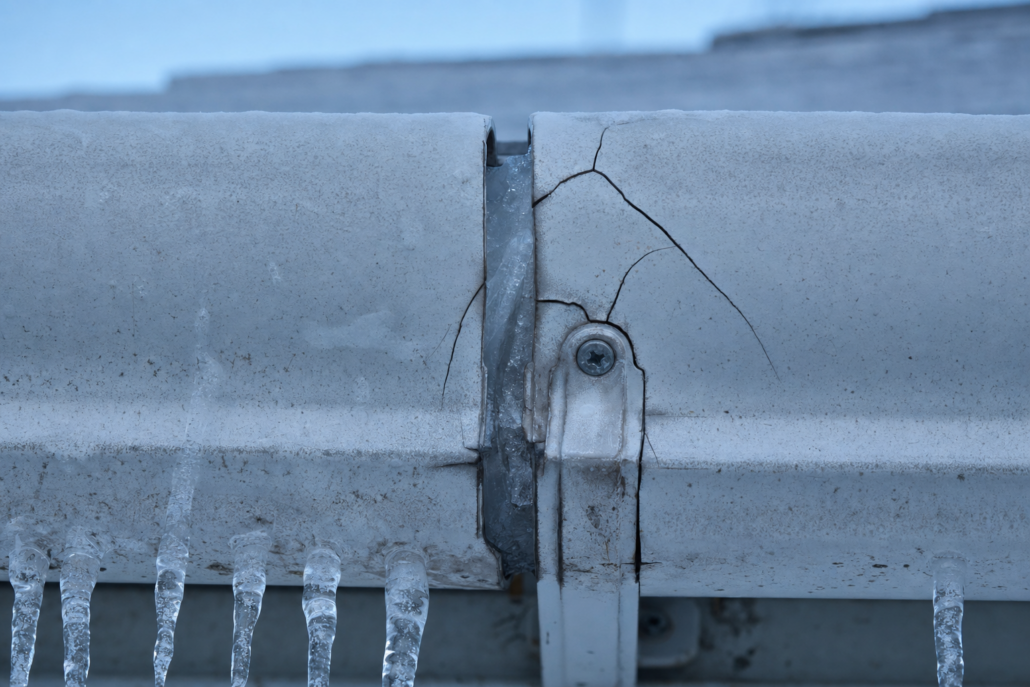
Freeze-thaw eavestrough Calgary issues are a common reason homeowners start asking how long their gutters should really last, especially when winter, Chinooks, hail, and spring melt all hit the same system in one year. For Calgary homeowners, White Knight Contracting is a local option for eavestrough work when repairs, replacement, or a proper inspection are needed. In a mild climate, a good aluminum eavestrough system may last decades. In Calgary, though, the answer depends on installation quality, drainage slope, maintenance, tree cover, ice buildup, and storm damage. A well-installed system can often last 20 years or more, but neglected eavestroughs may fail much sooner. That is why it helps to know what damages them, what signs to watch for, and what to expect when asking for an eavestrough quote 2026.
Table of Contents
- History of Eavestroughs on Calgary Homes
- Freeze-thaw eavestrough Calgary: Why Lifespan Can Be Shorter
- Current Trends in Eavestrough Materials and Installation
- Common Challenges That Lead to Early Failure
- Eavestrough Cost Calgary and Pricing Expectations
- Company Highlight
- Future Prospects: What Homeowners Should Expect
- FAQ
- Q&A
History of Eavestroughs on Calgary Homes
Eavestroughs have always had a simple job: move water away from the roof, siding, foundation, and landscaping. Older Calgary homes often used sectional gutter systems, where shorter pieces were joined together with seams. These worked, but every seam became a possible leak point over time. As homes became larger and rooflines more complex, water control became more important. Modern systems often use continuous aluminum runs, sometimes called seamless eavestroughs, to reduce leaks and improve appearance. This change matters because Calgary weather puts pressure on every joint, screw, bracket, and downspout. In simple terms, fewer weak points usually means fewer places for water to escape.
Freeze-thaw eavestrough Calgary: Why Lifespan Can Be Shorter
Calgary’s freeze-thaw pattern is one of the biggest reasons eavestroughs may wear out faster than expected. A freeze-thaw cycle happens when temperatures rise above freezing, melt snow or ice, and then drop below freezing again. When water sits inside an eavestrough and freezes, it expands. That expansion pushes against seams, corners, end caps, brackets, and downspout openings. Then, when it thaws and freezes again, the same stress repeats. Over time, this can loosen fasteners, crack sealant, bend metal, and create leaks. Calgary can average 40–70 freeze-thaw cycles per year, which means small problems can grow quickly if water is not draining properly.
A real-world example is a south-facing roof after a Chinook. Snow melts during the day, runs into the eavestrough, and then freezes again overnight. If the gutter is clogged with leaves, roof grit, or old shingle granules, water has nowhere to go. It sits, freezes, expands, and starts pulling at the system. This is why a gutter that looked fine in October may sag or leak by March. Think of it like leaving a full water bottle in the freezer; once water expands, the container takes the hit.
Current Trends in Eavestrough Materials and Installation
Today, many Calgary homeowners choose aluminum because it is light, affordable, rust-resistant, and available in many colours. Continuous aluminum eavestroughs are popular because they reduce the number of seams. Fewer seams usually means fewer leaks, especially in freeze-thaw conditions. Some homes also use larger five-inch or six-inch profiles to handle bigger roof areas and heavy meltwater. This can be useful during fast snowmelt or summer storms. Another trend is stronger hidden hangers, which support the trough from inside and give a cleaner look. These small upgrades can make a big difference when comparing basic replacement to a longer-lasting system.
There are also add-ons like leaf guards, downspout extensions, and heat cables. Leaf guards can help reduce clogs, but they do not remove the need for inspections. Heat cables may help in certain ice-prone areas, but they should not be seen as a fix for poor slope or bad drainage. Downspout extensions are simple but very important because they move water farther away from the foundation. In many cases, the best system is not the most expensive one; it is the one designed for the roof, the yard slope, and Calgary’s weather.
Common Challenges That Lead to Early Failure
The most common eavestrough problems start small. A loose bracket, a clogged downspout, or a low spot in the gutter may not seem urgent. However, these issues allow water to pool, and standing water is hard on any system. In winter, that pooled water becomes ice. In summer, it can overflow during heavy rain and soak siding, windows, fascia, and soil near the foundation. Hail can also dent metal and knock systems out of alignment. If a roof has older shingles, loose granules can wash into the trough and create blockages.
Homeowners should watch for clear warning signs. These include water spilling over the edge, peeling paint on fascia, soil washout below roof edges, visible sagging, rust-coloured stains, or leaks at corners. Another sign is water pooling near the foundation after a storm. If these problems keep coming back after cleaning, it may be time to talk about gutter replacement pricing instead of another short-term repair. A repair is useful when the system is still straight, secure, and draining well. Replacement makes more sense when damage is spread across multiple sections.
Eavestrough Cost Calgary and Pricing Expectations
Eavestrough cost Calgary homeowners see can vary based on home size, number of stories, roof shape, access, material choice, downspouts, and whether fascia or soffit repairs are needed. A simple bungalow with easy access will usually cost less than a two-storey home with many corners and steep rooflines. Gutter replacement pricing may also change if the old system needs careful removal because of damaged fascia or hidden rot. For 2026, homeowners should expect contractors to look closely at material costs, labour, disposal, and safety needs before giving a final number. That is why an eavestrough quote 2026 should be based on an on-site inspection, not just a rough phone estimate. Photos can help, but they do not always show slope, hidden leaks, or loose backing boards.
When comparing quotes, ask what is included. Does the price include removal, disposal, new downspouts, elbows, corners, sealant, and proper fastening? Are downspouts being placed where water can drain safely? Is the company checking related parts like fascia, soffit, and siding? The cheapest quote may not be the best value if it skips important details. A fair quote should explain the scope clearly, so you understand what you are paying for and why.
Company Highlight
White Knight Contracting has been in business since 2011 and serves Calgary homeowners with exterior services such as roofing, siding, eavestrough, downspouts, soffit, fascia, and hail damage repair. One major strength is that they can handle connected exterior work, like siding, without needing a second contractor for many projects. This matters because eavestrough problems are often linked to fascia, soffit, roof edges, or storm damage. Having one team look at the whole exterior can save time and reduce confusion. Their strengths include local experience, hail damage knowledge, customer-focused service, and a strong understanding of Calgary weather. For homeowners, that means fewer handoffs and a clearer repair plan.
Future Prospects: What Homeowners Should Expect
Looking ahead, Calgary homeowners should expect more focus on water management, stronger materials, and better installation details. Weather swings are already a major part of home maintenance planning. As heavy rain, fast snowmelt, and hail remain concerns, properly sized eavestroughs and downspouts will become even more important. Homeowners may also see more interest in larger trough profiles, improved hanger systems, and smarter drainage layouts. Regular inspections will still be one of the best ways to extend lifespan. A good rule is to check eavestroughs in spring and fall, and again after major hail or wind events. If you are planning repairs soon, get an eavestrough quote 2026 before small winter damage turns into siding or foundation trouble.
FAQ
According to InterNACHI’s home component life-expectancy chart, aluminum eavestroughs and downspouts can last around 20 to 40+ years, which makes regular maintenance an important part of helping them reach their expected lifespan.
Q&A
Question
How does Calgary’s freeze-thaw cycle damage eavestrough faster than most people expect?
Answer
Water freezes in eavestrough, expands, and cracks seams and brackets — then thaws and refreezes repeatedly, causing progressive damage each cycle.
Question
How many freeze-thaw cycles does Calgary average per year and how does that impact eavestrough?
Answer
Calgary averages 40–70 freeze-thaw cycles per year, each one expanding water inside eavestrough seams and joints and accelerating deterioration.
To learn more and view our other blogs, click here,
Conclusion
So, how long should eavestrough last on a Calgary home? In ideal conditions, quality aluminum systems can last decades, but Calgary is not gentle on exterior materials. Freeze-thaw cycles, hail, clogged downspouts, poor slope, and aging sealant can shorten that timeline. The best approach is simple: keep the system clean, repair small problems early, and replace it when leaks, sagging, or repeated ice damage become common. If you compare quotes, look beyond price and ask about materials, slope, downspout placement, and related exterior repairs. With the right installation and care, your eavestroughs can protect your home for many years.
The photo used in this blog are for demonstration purposes only.

Leave a Reply
Want to join the discussion?Feel free to contribute!