Eavestrough repair Calgary is a common need for homeowners because local roofs, gutters, and downspouts deal with snow, ice, hail, and fast temperature swings almost every year. In Calgary, one warm Chinook can melt roof snow during the day, then freezing night air can turn that water into ice inside the gutter. That is when leaks, loose fasteners, and uneven drainage often begin. Homeowners comparing seamless and sectional eavestroughs usually want one clear answer: which option lasts longer with fewer problems? The right choice depends on your home, budget, roofline, and how much past damage is already there. White Knight Contracting helps Calgary homeowners understand these choices before small gutter issues become larger exterior repairs.
Table of Contents
- History of Seamless and Sectional Eavestroughs
- Eavestrough repair Calgary: Seamless vs. Sectional
- Current Trends for Calgary Winter Eavestrough Systems
- Common Challenges: Freeze-Thaw Gutter Damage
- Company Highlight
- Future Prospects for Eavestrough Materials
- FAQ
- Q&A
- Conclusion
History of Seamless and Sectional Eavestroughs
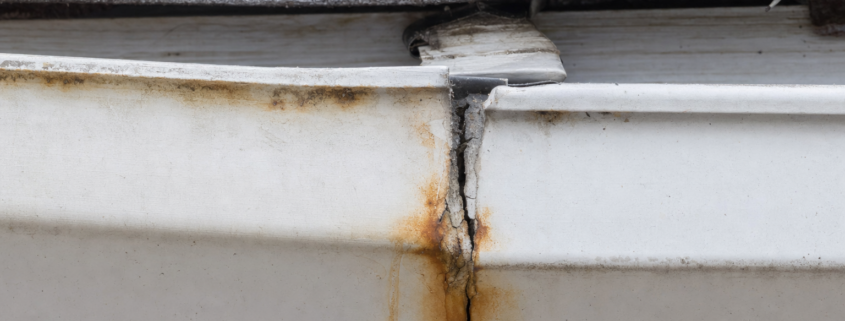
Sectional eavestroughs have been used on homes for many years because they are simple to transport, cut, and install. They come in shorter pieces that are joined together with connectors, sealant, and fasteners. This made them a popular choice for older homes, small repairs, and do-it-yourself projects. However, each joint creates a possible leak point, especially when water freezes and expands inside the trough.
Seamless eavestroughs became more common as contractors started using machines that form long gutter runs on-site. Instead of joining many short sections, a seamless system is made in longer pieces that fit the exact length of the roof edge. There are still seams at corners and downspout outlets, but there are far fewer joints overall. This matters in Calgary because fewer joints can mean fewer places for water to escape during heavy rain, spring melt, or hail season.
Eavestrough repair Calgary: Seamless vs. Sectional
When comparing seamless and sectional systems, the biggest difference is how each one handles stress. A sectional eavestrough has more connection points, so it can be easier to replace one damaged piece. That can be useful after a branch strike or a small dent from impact. However, those same connection points may loosen over time, especially after several seasons of snow load and ice buildup.
A seamless eavestrough is usually stronger as one continuous run. Since there are fewer seams, there are fewer places where leaks can start. This is helpful for long rooflines where water needs to move quickly toward downspouts. The tradeoff is that seamless systems need professional equipment and skilled installation. If a long section is badly bent or pulled away, the repair may require replacing the full run rather than one small piece.
For many homeowners, seamless eavestroughs are the better long-term option when the goal is fewer leaks and a cleaner look. Sectional systems can still make sense for smaller buildings, detached garages, tight budgets, or short-term fixes. Think of it like a garden hose: one long hose usually leaks less than several short hoses connected together. Every connector works fine at first, but over time, wear and pressure can show up at the joints.
Current Trends for Calgary Winter Eavestrough Systems
More Calgary homeowners are choosing stronger gutter systems because weather patterns are hard on exterior materials. Calgary often sees heavy snow, hailstorms, and rapid freeze-thaw cycles caused by Chinooks. According to Canadian climate data, Calgary receives significant annual snowfall, and temperatures can move above and below freezing many times in a single season. That repeated movement is one reason Calgary winter eavestrough planning matters so much.
Another trend is better water management. Homeowners are asking for larger downspouts, stronger hangers, and better slope so water drains before it freezes. A proper slope means the eavestrough is slightly angled toward the downspout, even if it looks level from the ground. Many newer installs also use aluminum because it is light, rust-resistant, and cost-effective. Steel may be stronger, but it is heavier and can cost more, while vinyl is cheaper but may become brittle in cold weather.
Homeowners are also paying more attention to curb appeal. Seamless systems often look cleaner because there are fewer visible joints along the roofline. This can help homes look newer and better maintained. For sellers, a neat exterior can support buyer confidence during a showing. For owners staying long term, it simply means fewer annoying drips near doors, walkways, and basement windows.
Common Challenges: Freeze-Thaw Gutter Damage
Freeze-thaw gutter damage happens when water enters small gaps, freezes, expands, and pushes materials apart. This can widen seams, loosen brackets, and make sealant fail. Over time, you may notice dripping at corners, staining on siding, or water pooling near the foundation. If left alone, these problems can affect fascia boards, soffits, landscaping, and even basement moisture levels.
Eavestrough cracking is another issue, especially in older plastic or poorly supported systems. Cracks may begin as small lines, but they can grow when ice forms inside the trough. Metal systems usually do not crack the same way, but they can bend, corrode, or separate at joints. In Calgary, hail can also dent gutters and change how water flows. Even a small low spot can hold water, and standing water often turns into ice during cold nights.
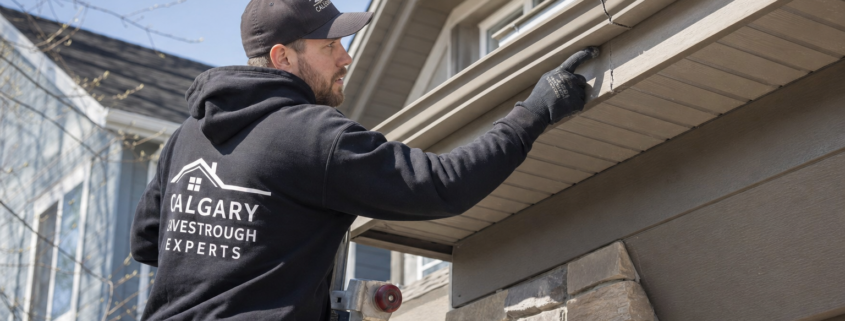
Homeowners should check their gutters at least twice a year: once after spring melt and once before winter. Look for sagging, rust, separated seams, missing screws, and water spilling over the front edge. During rain, watch where the water goes. If it pours behind the gutter or lands near the foundation, the system is not doing its job. Early repair is almost always cheaper than waiting until fascia or siding damage appears.
Company Highlight
White Knight Contracting has been in business since 2011 and brings a broad exterior repair approach to Calgary homes. One major strength is that the team can handle many related jobs, including siding, without homeowners needing to hire a second contractor. That matters because eavestrough trouble often connects to other exterior issues. For example, a leaking gutter may stain siding, soften fascia, or send water behind trim.
This full-service approach can save time and reduce confusion. Instead of one contractor fixing the gutter and another checking the siding, one team can look at how the whole exterior is working together. That is especially useful after hailstorms, wind damage, or freeze-thaw gutter damage. Homeowners get clearer advice, fewer scheduling problems, and a better chance that the root issue is fixed instead of only the visible symptom.
Future Prospects for Eavestrough Materials and Repairs
The future of eavestrough systems is moving toward better durability, smarter drainage, and lower maintenance. More homeowners are asking for gutter guards, stronger hidden hangers, and custom-fit seamless systems. Gutter guards are covers or screens that help keep leaves and debris out while allowing water to enter. They do not remove all maintenance, but they can reduce clogs when installed correctly.
Technology is also changing inspections. Contractors may use moisture meters, photos, and detailed exterior checks to show homeowners exactly where water is moving. In the future, more homes may use sensors to warn owners when gutters are clogged or water is overflowing. Still, the basics will remain the same: good slope, strong materials, enough downspouts, and clean drainage away from the foundation.
For Calgary homes, the most practical future-ready choice is usually a well-installed aluminum seamless system with proper drainage planning. Sectional eavestroughs will remain useful for budget repairs and smaller structures. However, when long-term performance matters, fewer seams and stronger installation usually win. That is why many homeowners looking into Eavestrough repair Calgary also ask whether replacement is the smarter move.
FAQ
For Calgary homeowners comparing eavestrough options, seamless systems are often the better long-term choice because fewer seams mean fewer weak points where leaks can develop.
Q&A
Question
How do Calgary homeowners decide between repairing or fully replacing their eavestrough?
Answer
Minor leaks and small holes are repairable, but widespread sagging, corrosion, or separation means full replacement is more cost-effective long term. A good rule is to look at how many problem areas exist. If one corner leaks, a repair may be enough. If several sections are pulling away or overflowing, replacement usually gives better value and fewer future service calls.
Question
How much does eavestrough repair typically cost in Calgary compared to full replacement?
Answer
Minor eavestrough repairs in Calgary run $150–$400, while full replacement averages $800–$2,500 — making replacement more cost-effective when damage is widespread. Costs vary based on home size, height, material, access, and whether fascia or siding repairs are also needed.
To learn more and view our other blogs, click here,
Conclusion
Seamless and sectional eavestroughs both have a place, but Calgary’s weather often makes seamless systems the stronger long-term choice. Fewer joints mean fewer weak points, which is helpful when snow, ice, hail, and fast temperature changes are part of normal home ownership. Sectional gutters can still work well for smaller repairs, garages, or budget-conscious projects. However, if your home already has sagging, leaking seams, eavestrough cracking, or signs of freeze-thaw gutter damage, replacement may be the better investment. The best next step is to inspect the full drainage path, compare repair costs with replacement costs, and choose a system that protects the roofline, siding, and foundation for years to come.
The photo used in this blog are for demonstration purposes only.