Vinyl Deck Winter Calgary Durability

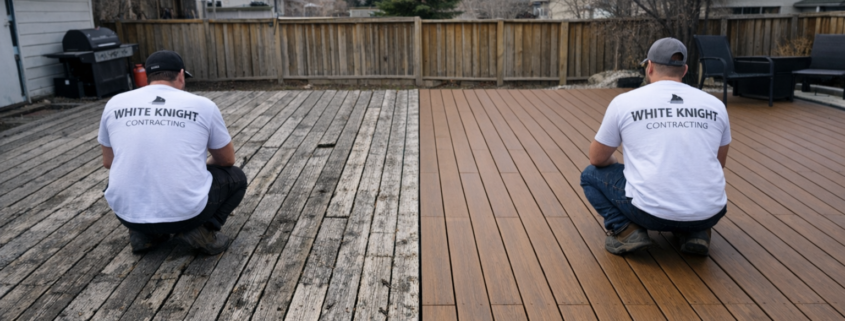
Vinyl deck winter Calgary is a popular search for a reason: our weather can flip from chinook melts to deep-freeze nights in a single week. If you’ve ever chipped ice off a deck board or watched spring meltwater seep into cracks, you already know winter is the real stress test. The good news is that vinyl decking is built for tough conditions when it’s installed the right way and paired with smart winter habits. In Calgary, it’s also a practical choice because it can act as a waterproof walking surface, not just a “pretty top layer.”

If you’re planning a deck upgrade, White Knight Contracting can help you choose a vinyl system that fits Calgary’s temperature swings and moisture demands. This matters because your deck isn’t just dealing with snow—it’s dealing with freeze-thaw cycles, drifting ice, and water that wants to sneak into every seam. Let’s break down what durability really means in winter, what can go wrong, and what you can do to keep a deck looking good for years.

Table of Contents

What vinyl decking is (and why winter changes everything)

Vinyl decking usually means a PVC-based waterproof membrane surface that’s installed over a solid deck base. Think of it like a heavy-duty, walkable “roof” for your deck. The key word is waterproof: water can’t soak in the way it does with wood, so you’re not constantly battling swelling, rot, and splitting. That alone is a big win for Calgary winter durability, because melting snow has fewer places to hide.

Winter changes the game because snow can sit for weeks, and then a sunny day turns it into a shallow “pond” that refreezes at night. If a surface has tiny gaps, water will find them. With vinyl, the goal is a sealed system with proper edges, seams, and drainage so water sheds away instead of pooling.

A quick history of vinyl waterproof deck surfaces

Waterproof deck membranes have been used for decades in places with wet climates and heavy seasonal changes. Early products proved the concept, but modern vinyl membranes improved on thickness, texture, UV resistance, and seam welding methods. Today, many systems are designed specifically for exposed decks, where sun, foot traffic, and winter ice all hit the same surface.

In Alberta, the popularity has grown because people want outdoor space without the springtime repair list. Instead of staining boards, swapping cracked planks, and worrying about water dripping to a patio below, homeowners increasingly choose surfaces that handle moisture first and looks second.

Vinyl deck winter Calgary: what “durable” really means

Durability isn’t just “will it survive a cold day?” It’s a mix of impact resistance, water resistance, slip resistance, and how well it handles repeated expansion and contraction. A vinyl surface can take daily use all winter—boots, shovels, salt residue, and patio furniture—without the same kind of surface breakdown you often see on wood.

A real-world example: imagine two identical decks after a mid-winter thaw. The wood deck absorbs meltwater at the seams and fastener holes, then freezes overnight. That freeze expands the trapped moisture and widens tiny cracks. On a vinyl membrane, water typically stays on top and drains off, so you’re not feeding that crack-and-split cycle. That’s why vinyl deck winter is less about “toughing it out” and more about “keeping water out in the first place.”

Winter deck performance: snow, ice, and freeze-thaw

Winter deck performance in Calgary comes down to how well the deck sheds water and resists damage from ice. Snow itself isn’t the biggest enemy—ice is. Ice forms when snow partially melts, then refreezes into a bonded layer. If your deck has low spots, those become ice patches that stick around and tempt people to hack at them with metal tools.

Vinyl can perform well here, but the “system” matters. Proper slope (so water runs off), clean edges, and correct detailing reduce ice buildup. It also helps to use smart clearing habits, because even a strong surface can get scuffed by aggressive ice chopping. In other words, Calgary winter durability is partly about material choice and partly about winter behavior.

Vinyl deck cold weather and Alberta temperature swings

One of the most common concerns is Alberta freeze decking conditions, especially those sudden temperature swings that happen in shoulder seasons. Quality vinyl decking is rated for temperatures from -40°C to +50°C, covering Alberta’s full seasonal range. It expands and contracts slightly but won’t crack or warp within normal Calgary temperature swings. That’s important because it means the membrane can stay stable while the structure beneath it moves a little.

Cold matters not only for the vinyl, but also for adhesives, seam work, and edge details. That’s why proper installation timing and proven methods are part of the durability story. If you’re planning a project, ask what temperature requirements the installer follows for welding/seaming and finishing, because that’s where long-term performance is protected.

Snow ice deck protection: habits that prevent damage

Even with a strong surface, a few winter habits make a big difference. The goal is simple: remove snow safely, reduce ice bonding, and avoid scratching the top layer. These small steps help your vinyl deck cold weather performance stay consistent year after year.

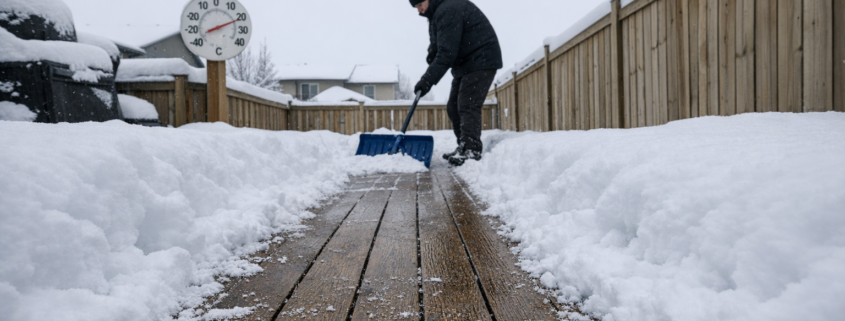
  • Use a plastic shovel (not metal) to reduce surface scuffing.
  • Clear snow earlier rather than letting it compress into ice.
  • Use traction products recommended for vinyl surfaces, and avoid harsh chemicals when possible.
  • Place a mat at door exits so grit doesn’t grind into the surface.
  • Keep drainage paths open so meltwater can actually leave the deck.

Here’s a simple analogy: treat it like a car’s clear coat. The paint is durable, but if you scrape it with a sharp tool every week, it will show wear faster. Snow ice deck protection is about working with the surface, not against it.

Comparing methods: vinyl vs wood vs composite in winter

Choosing a deck surface in Calgary often comes down to what kind of maintenance you can live with. Wood looks great but tends to absorb water, and that’s why it can crack and splinter after repeated freeze-thaw cycles. Composite boards resist rot, but they aren’t automatically waterproof systems—water can still drain between boards and sit on joists below, which matters if you’re trying to keep the area under the deck dry.

Vinyl is different because it’s designed to be a waterproof layer. In winter deck performance terms, that means you’re not relying on sealants soaking into wood fibers or hoping boards stay perfectly aligned. You’re relying on a continuous membrane plus proper drainage. For many homeowners, that’s the “peace of mind” factor during Calgary winter durability season.

Common challenges (and how to avoid them)

Vinyl is tough, but it isn’t magic. One challenge is physical impact from patio furniture legs, sharp ice, or dropped tools. Another is hail: premium vinyl decking is impact-resistant and can handle moderate hail. Severe Calgary hailstorms may cause surface scuffing, but vinyl is far more durable than wood which cracks and absorbs water damage. If you’re worried about hail, ask about texture choices and wear-layer thickness, since those can affect how visible scuffing will be.

Also, watch for water pooling. Pooling often points to slope or drainage issues, not “bad vinyl.” If you ever see water sitting after a melt, it’s worth investigating early. Fixing drainage details is usually far easier than dealing with long-term moisture problems later.

Future prospects and trends for Calgary winter durability

Looking ahead, the trend is toward stronger wear layers, better textures for slip resistance, and more consistent installation standards. Homeowners are also choosing systems that reduce maintenance time—because winter is already enough work without adding deck repairs to the list. Another big shift is “single-contractor accountability,” where people want one team handling the full exterior scope so details don’t get missed between trades.

As materials improve, expectations rise too. People want decks that look clean in summer and stay safe in winter. That’s why vinyl deck winter Calgary planning increasingly includes drainage strategy, stair detailing, and realistic snow-clearing routines, not just color selection.

Company Highlight

White Knight Contracting has been in business since 2011, and one of their standout strengths is being able to handle multiple exterior needs in one place—like siding—without needing a second contractor. That matters for deck projects because winter durability isn’t only about the deck surface; it’s also about how nearby exterior details manage water. When one team can coordinate the deck membrane, transitions, and related exterior work, you reduce the risk of “handoff gaps” where small details get overlooked.

Just as importantly, their experience with Calgary conditions helps set realistic expectations for Alberta freeze decking challenges. A deck that performs well in winter is usually the result of good planning, solid structure, and correct finishing details—not guesswork.

FAQ

According to Tufdek’s product FAQ, their vinyl/PVC deck membrane has been tested to cold‑crack standards down to -40°C, supporting the claim that properly specified vinyl deck membranes can remain durable in extreme winter conditions. (tufdek.com)

Q&A

Question: How durable is vinyl decking against Calgary’s hail and winter storms?

Answer: Premium vinyl decking is impact-resistant and can handle moderate hail. Severe Calgary hailstorms may cause surface scuffing, but vinyl is far more durable than wood which cracks and absorbs water damage.

Question: What temperature range can vinyl decking handle in Alberta?

Answer: Quality vinyl decking is rated for temperatures from -40°C to +50°C, covering Alberta’s full seasonal range. It expands and contracts slightly but won’t crack or warp within normal Calgary temperature swings.

To learn more and view our other blogs, click here,

Conclusion

Choosing vinyl in Calgary is mostly about choosing a surface that treats water like the enemy it is. When you plan for slope, drainage, and safe snow clearing, vinyl deck winter can be a low-stress experience compared to surfaces that absorb moisture and crack over time. If you want strong Calgary winter durability, focus on the full system: the membrane quality, the installation details, and the everyday habits that prevent ice from turning into damage. With the right approach, winter becomes something your deck handles—not something you constantly fix.
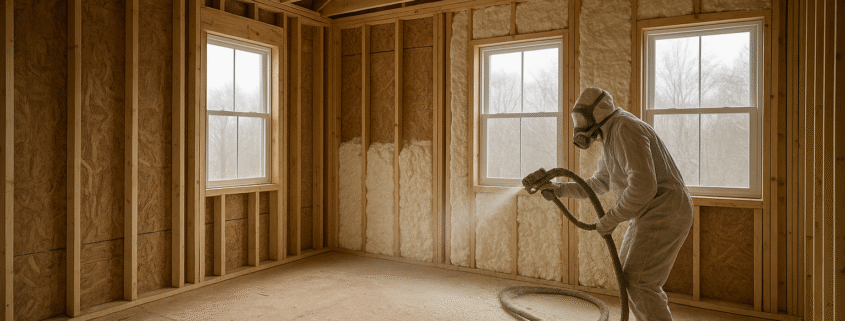
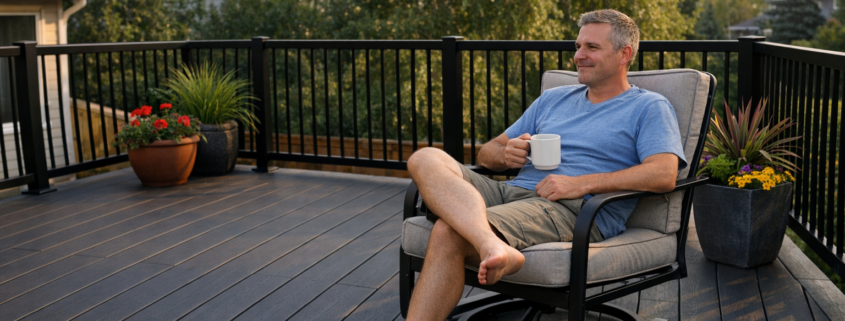
The Photo used in this blog are for demonstration purposes only.

Long Winters Need Better Insulation

Why Thickness Matters for Winter Ready Insulation

When it comes to thickness, nothing is more essential for winter ready insulation and cold climate preparation. Considering the extreme Canadian winter, the right insulation layer stops precious heat from escaping while keeping frigid drafts where they belong—outside. At White Knight Contracting, experienced teams know that choosing the proper insulation thickness is the foundation for comfortable, energy-efficient homes, even during the longest winters.

Table of Contents

History of Insulation in Cold Climates

Centuries ago, people relied on animal hides, straw, and mud to block winter winds. The science of frost protection foam and insulation thickness took great strides in the mid-20th century. In Canada, homes built before the 1970s often had minimal insulation, making winters unbearable for homeowners dealing with skyrocketing heating bills and persistent drafts.

Only as research linked insulation performance to significant winter energy savings did industry standards improve. The development of polyisocyanurate and spray foam addressed many early weaknesses—like moisture infiltration and heat loss at wall seams.

Today, maximizing thickness is a leading trend in winter ready insulation. Many homeowners choose spray foam, which expands to fill every gap and delivers high thermal resistance (R-value) even at moderate thicknesses. Newer materials like rigid foam or “frost protection foam” offer better performance with thinner profiles compared to old fiberglass batts. This means you can achieve high R-values without sacrificing interior space.

  • Spray foam: Provides an air-tight and vapor-proof barrier—ideal for extreme cold.
  • Rigid board insulation: Delivers increased R-value per inch for exterior walls.
  • Blown-in cellulose: Eco-friendly and good for retrofitting attics or wall cavities.

Canada’s National Building Code now calls for higher minimum R-values in exterior walls and roofs, a move that helps homeowners prepare for longer, colder winters while reducing total home energy use.

Common Challenges Long Winters Bring

Long winters in places like Calgary, Edmonton, or Winnipeg test every part of a home’s building envelope. Without proper insulation thickness, you can expect:

  • Frozen pipes and uncomfortable drafts in living spaces.
  • Rising energy costs—often hundreds per winter season.
  • Condensation issues inside walls, leading to possible mold growth.
  • Higher carbon emissions and bigger ecological footprints.

By improving cold climate preparation with the right insulation, these headaches are minimized, and your home’s comfort is protected even when temperatures plunge.

Choosing the Right Thickness for Your Home

How thick should insulation be for maximum winter energy savings? The answer depends on your location, home age, and the product chosen. Most modern spray foams and frost protection foams offer R6–R7 per inch, while older fiberglass delivers closer to R3–R4. In Alberta and Saskatchewan, R-values of R40–R60 in attics and R20–R24 in walls are common best practices.

Here’s a simple step-by-step guide:

  • Assess your climate—and aim for higher thickness in areas below -10°C regularly.
  • Review current insulation type and R-value using a home energy audit.
  • Upgrade or add winter ready insulation to meet or exceed code requirements.
  • Consider spray foam in hard-to-reach or condensed wall spaces.
  • Seal air leaks before adding bulk insulation for maximum performance.

Remember: the right thickness is a balance between cost, available wall space, and achieving the recommended R-value for your climate.

Best Practices for Cold Climate Preparation

Make your house truly winter ready with these insulation tips:

  • Check for gaps in basements and attics, notorious for heat loss.
  • Install frost protection foam around pipes and foundation walls.
  • Upgrade attic insulation—it’s the area with the highest heat loss.
  • Work with professionals who understand thickness requirements and installation details.

In addition to insulation, consider air sealing, new weatherstripping, and insulated exterior doors. White Knight Contracting has been in business since 2011, and can also handle siding upgrades at the same time—avoiding the need for multiple contractors on tough jobs.

Future of Winter Insulation Thickness

As energy codes tighten and more homeowners prioritize year-round comfort, insulation will keep advancing. Research focuses on thinner materials that provide even higher R-values, easier installation, and lower environmental impact. Builders are testing advanced aerogels and vacuum-insulated panels, which could revolutionize cold climate preparation by offering greater performance in smaller spaces.

Experts believe that soon, “smart” insulation will adjust its thermal properties based on outside conditions—making custom winter energy savings effortless for every home.

Interesting FAQ

Tiger Foam compares the uses and benefits of different spray foam types for building insulation. Want to learn about closed-cell versus open-cell spray foams, water resistance, and price? This resource breaks down which is best for your project, how thickness plays a role in overall performance, and current options available in the market.

FAQs

  • How thick should my attic insulation be for winter energy savings? In most cold Canadian climates, aim for at least R40 (about 12–16 inches of standard batt or blown-in insulation) in attics.
  • Does “frost protection foam” actually prevent pipes from freezing? Yes, when applied with sufficient thickness around pipes and foundation walls, this insulation can help avoid freezing during even the harshest winter snaps.
  • Can insulation upgrades really lower my heating bill? Absolutely—proper cold climate preparation and increased insulation thickness can cut home heating costs by 10–30% per season, depending on the state of your current insulation.
  • Is spray foam better for thin or irregular spaces? Spray foam expands to fill every nook and cranny, making it perfect for tight spaces or areas that traditional batts can’t reach, ensuring even and consistent winter ready insulation.
  • Should I upgrade insulation when doing new siding? It’s the perfect time! White Knight Contracting can help you boost both curb appeal and energy efficiency in one seamless upgrade.


Low Maintenance Deck Calgary Solutions

If you want a low maintenance deck Calgary homeowners can count on through chinooks, hail, and long winters, picking the right surface matters as much as the build. Many decks in the city look great in year one, but start peeling, cracking, or soaking up grime once the freeze-thaw cycle repeats. The good news is that modern materials can make deck ownership feel a lot less like a chore. That’s why more homeowners are shifting toward “set-it-and-enjoy-it” options that still look sharp year after year. You’ll also want a contractor who understands local weather and can finish the whole exterior cleanly without bouncing you between trades. That’s where White Knight Contracting comes in for homeowners looking for durable, practical deck upgrades.

Table of Contents

Why low-maintenance matters in Calgary

Calgary decks deal with big swings: warm sun one day, snow the next, plus dry air and strong UV at elevation. Those conditions are rough on wood because moisture can soak in, then expand as it freezes, which leads to checking (tiny cracks), warping, and faster wear. Even if you stay on top of upkeep, a traditional wood deck often needs ongoing work to keep it looking fresh. That’s why many homeowners ask for Calgary deck solutions that reduce annual sanding, staining, and surprise repairs.

Think of it like owning a vehicle: some cars run great but need constant maintenance, while others are built to reduce routine work. A low maintenance deck works the same way. You’re not “skipping care,” you’re choosing a surface that doesn’t demand constant refinishing to survive. For busy families, rental properties, and anyone who wants more patio time and less weekend labor, this shift is a real quality-of-life upgrade.

Low maintenance deck Calgary options (and how they compare)

When people say “low maintenance deck,” they usually mean a surface that doesn’t need frequent sealing, staining, or repainting. In Calgary, the most common choices are pressure-treated wood (higher upkeep), composite decking (moderate upkeep), and vinyl decking (very low upkeep). Each option has trade-offs in cost, feel, and how it handles sun and moisture. The best pick depends on your priorities: budget today, time saved later, and the look you want.

Pressure-treated wood (common, but not truly low-maintenance)

  • Often lower upfront cost, widely available
  • Needs ongoing protection (stain/seal) because water still gets in over time
  • More likely to splinter or crack as seasons change

Composite decking (lower upkeep, different look/feel)

  • Made from wood fibers and plastics; designed to reduce staining and fading
  • Usually needs periodic washing, especially in shaded or high-traffic areas
  • Can feel warmer underfoot in direct sun and can scratch depending on the product line

Vinyl decking (built for easy cleaning and strong water protection)

  • Creates a water-shedding surface that helps protect the structure underneath
  • Great for second-story decks where keeping water out matters more
  • Typically simple to clean, making it a strong easy deck care Calgary choice

Vinyl deck advantages for Alberta weather

One of the biggest vinyl deck advantages is how it handles moisture. Instead of acting like a sponge the way wood can, vinyl is designed as a protective layer that helps keep water from soaking into the deck system. That’s a big deal in Alberta deck care because snowmelt and spring runoff can find their way into tiny openings and cause long-term damage. If you’ve ever seen paint peeling near deck edges or soft spots near rail posts, moisture is usually part of the story.

Vinyl can also be a good fit for real-life Calgary scenarios: a family that wants hose-and-go cleanup after muddy paws, or homeowners who BBQ often and don’t want stains to become permanent. While no material is “zero maintenance,” vinyl aims to make upkeep feel simple and predictable. In day-to-day terms, it’s less about special products and more about quick cleaning when needed. That’s why a low maintenance deck Calgary plan often includes vinyl when the goal is fewer chores and better water control.

Easy deck care Calgary: what to expect season by season

Even with a low maintenance deck, Calgary’s seasons still leave a mark. Wind can blow grit onto the surface, pollen can coat it in early summer, and winter can leave behind sand or de-icing residue. The key difference is how you respond: instead of sanding and resealing, you’re usually just washing and doing small checkups. That’s the heart of easy deck care Calgary—short, regular tasks that prevent bigger problems.

Spring

  • Rinse off winter grit and debris so it doesn’t grind into the surface
  • Check drains, edges, and corners where leaves can collect

Summer

  • Spot-clean food splatter and BBQ grease sooner rather than later
  • Quick rinse during dry spells keeps dust from building up

Fall

  • Clear leaves to avoid trapped moisture and slippery patches
  • Do a last clean before snow season

Winter

  • Use a plastic shovel if you’re clearing snow
  • Avoid harsh scraping that can gouge many deck surfaces

Deck maintenance tips that actually help

Most deck problems don’t start big—they start small, then get ignored. A loose edge, water that doesn’t drain well, or grime that stays damp in a corner can turn into a bigger repair later. These deck maintenance tips are simple, but they’re the kind that protect your investment over time. They also apply across many Calgary deck solutions, whether you choose vinyl, composite, or sealed wood.

  • Clean gently but consistently: mild soap and water is often enough; avoid harsh chemicals unless the manufacturer allows them.
  • Watch the “always-wet” spots: shaded corners and areas under planters tend to hold moisture longer.
  • Use furniture pads to reduce scuffs and pressure marks.
  • Keep planters lifted slightly so water can drain and air can move underneath.
  • Do a quick rail and fastener check twice per year for safety.

Across Canada, outdoor living has become a bigger priority, and low-upkeep materials continue to grow in popularity. Homeowners want finishes that keep their look without constant rework, especially as labor and material costs fluctuate. A practical trend is choosing systems that protect the deck structure underneath, not just the walking surface. That’s one reason waterproof surfaces and improved drainage details are getting more attention in Alberta deck care planning.

The main challenge is that “low maintenance” can be oversold. Every deck still needs cleaning and occasional inspections, and installation details matter as much as the material. If water is trapped due to poor slope or bad flashing, even the best surface won’t save the framing below. Looking ahead, expect more product options that focus on UV resistance, better traction, and longer warranties, plus more homeowners comparing lifecycle cost (what you spend over 10–20 years) rather than just upfront price.

Company Highlight

White Knight Contracting has been in business since 2011, and that experience shows up in the small choices that make decks last in Calgary’s weather. One standout strength is that they can handle multiple exterior needs in one project—like siding—without you needing to hire a second contractor. That can help timelines stay simpler and reduces the finger-pointing that sometimes happens when different trades overlap. If you’re planning a low maintenance deck Calgary upgrade, it’s helpful to work with a team that thinks about the full exterior system, not just the surface you walk on. In many homes, decks connect to doors, siding lines, and drainage paths, so coordination matters. A single team managing those details can mean fewer surprises and a cleaner final finish.

FAQ

Interesting FAQ: For homeowners looking for a low-maintenance deck in Calgary, composite decking can reduce upkeep because unlike wood, composite decking never needs stain, sealer or paint and typically only needs occasional soap-and-water cleaning. (decks.com)

Q&A

Question: What makes vinyl decking low maintenance compared to wood in Calgary?

Answer: Vinyl decking doesn’t require annual staining, sealing, or painting like wood. It resists rot, insects, and UV fading, requiring only occasional washing with soap and water to stay looking new.

Questions: How often does a vinyl deck need to be cleaned in Calgary?

Answer: A vinyl deck in Calgary should be cleaned 2–3 times per year — once in spring to remove winter debris, mid-summer for pollen and BBQ residue, and in fall before snow season.

To learn more and view our other blogs, click here,

Conclusion

Choosing the right low maintenance deck Calgary homeowners will enjoy for years comes down to being honest about time, weather, and how you actually use the space. If you love the natural look of wood, plan for routine protection and ongoing touch-ups. If you want less upkeep, composite and vinyl both reduce the “annual chore list,” with vinyl standing out when water control and easy cleaning are top priorities. No matter which surface you pick, good drainage, proper edges, and seasonal rinsing go a long way. When your deck is built and finished with Calgary’s conditions in mind, you get more relaxing weekends—and fewer projects that start with “we should really deal with that.”


The photo used in this blog are for demonstration purposes only

Retrofit Spray Foam Commercial Properties

Retrofit Spray Foam for Commercial Properties: Staying Warm Against the Cold

The cold has a way of creeping into every crack and corner of older commercial properties, making heating bills soar and comfort plunge. At White Knight Contracting, commercial retrofit insulation with spray foam offers a smart, effective solution that upgrades insulation—locking out winter chills and locking in energy savings for your business.

How Old Building Insulation Needed an Upgrade

Decades ago, builders didn’t have commercial retrofit insulation in mind. As a result, many old buildings relied on basic fiberglass batts, cellulose fill, or—sometimes—just air pockets in brick or cinder block walls. Over time, as energy prices rose and the cold kept sneaking in, business owners realized the need for better solutions. Spray foam emerged as a top upgrade insulation material because it fills every gap, seals out drafts, and significantly boosts commercial efficiency.

In Alberta, winters can freeze even the toughest structures. Using state-of-the-art spray foam helps older buildings retrofit their insulation and meet today’s building codes—without major demolition.

Modern property managers and business owners are now focusing on commercial retrofit insulation to cut down on utility costs and shrink their carbon footprints. Spray foam, thanks to its high R-value (a measure of insulation effectiveness), lifetime durability, and air-sealing properties, is the preferred choice.

  • Spray foam conforms instantly to uneven or irregular spaces, sealing against air leaks that the cold exploits.
  • Upgrading insulation in older buildings can increase property value and appeal to environmentally conscious tenants.
  • Recent years have seen nationwide incentives and rebates for commercial efficiency upgrades, making retrofit projects more affordable.
  • Advanced formulas now ensure spray foam installation can be done safely, even in challenging winter temperatures.

Energy Star reports that properly installed insulation can improve a building’s energy efficiency by up to 30%.

Challenges of Cold-Weather Spray Foam in Commercial Properties

Applying spray foam in cold, damp, or icy weather takes special care. The foam’s reaction depends on temperature and humidity, making it important to work with professionals who understand product behavior in our region’s harsh winters. Before starting a commercial retrofit insulation project, consider:

  • Surface preparation: Remove moisture and frost to help the foam bond tightly.
  • Ventilation: Safety first! Good airflow ensures a safe application during and after spraying.
  • Timing: Scheduling during milder weather, or using heated enclosures, keeps installations on track even in winter months.
  • Material selection: Closed-cell spray foam is ideal for cold climates because it acts as both an insulator and vapor barrier.

Knowledgeable teams understand local codes and building science—saving you costly surprises later.

Future of Insulation and Commercial Efficiency Upgrades

Looking ahead, more businesses will focus on commercial efficiency upgrades. Retrofit spray foam for commercial properties is expected to grow due to:

  • Stricter energy codes for commercial buildings.
  • Increased demand for sustainable, green certifications.
  • Technological improvements in spray foam products for even colder climates.

Researchers at the National Research Council of Canada predict further improvements in insulation materials will continue, helping make retrofit projects easier, faster, and more effective—even as winters stay harsh.

Step-by-Step: How Commercial Retrofit Spray Foam Works

Retrofit spray foam can renew old building insulation without gutting walls. Here’s how the process is typically handled:

  1. Assessment: Technicians survey your building, checking insulation gaps and cold spots.
  2. Preparation: Remove old, failing insulation and ensure all areas are dry and accessible.
  3. Application: Special hoses deliver spray foam into wall cavities, attics, and other hard-to-reach spots.
  4. Curing: The foam expands, hardens, and seals up cracks—locking out the cold and preventing energy loss.
  5. Finishing: Once set, walls and ceilings are patched or refinished as needed for a seamless result.

For large commercial buildings, the process can be phased to minimize disruption to ongoing business operations.

Comparisons: Spray Foam vs. Traditional Methods

A quick look at common options for old building insulation reveals why spray foam excels:

  • Fiberglass batts: Inexpensive but prone to air leaks and settling; struggles in irregular wall cavities.
  • Blown-in cellulose: Fills gaps, but can absorb moisture and lose effectiveness.
  • Spray foam: Higher upfront cost, but better R-value, air sealing, and moisture resistance for long-term savings.

Spray foam is both an insulation and barrier, helping lower heating and cooling costs for decades, making it an efficient upgrade choice for commercial property owners.

Interesting FAQ

Accufoam explains specific techniques for applying spray foam insulation effectively in cold climates.

  • How long does a commercial retrofit insulation job usually take? Most projects take a few days to a week, depending on the size and complexity of the building.
  • Can I upgrade insulation without shutting down my business? Yes, professionals can complete retrofit spray foam projects in stages to minimize disruption.
  • Is spray foam safe for employees and customers? Once cured, spray foam is inert and safe. Installers take precautions to keep areas ventilated and contained during application.
  • Will spray foam help with noise in busy commercial properties? Absolutely! Spray foam not only improves thermal performance but also dampens unwanted sound.
  • What if I need other work, like siding, done during my retrofit? White Knight Contracting has been in business since 2011 and handles a wide range of commercial improvements—so you won’t need to hire multiple contractors.

Location Map

Conclusion & Next Steps

Upgrading old building insulation is one of the smartest steps you can take to defeat the cold, save on energy bills, and boost your commercial property’s value. Retrofit spray foam insulation is a reliable solution for improved commercial efficiency and lasting comfort. To learn more and view our other blogs, click here.

Calgary Vinyl Deck Replacement Guide

Vinyl deck replacement Calgary projects are one of the easiest ways to stop leaks, cut down on yearly maintenance, and make a deck feel “new” again—especially with our freeze-thaw weather. If your deck has started to feel soft underfoot, grows mildew no matter how often you clean it, or keeps costing you money in repairs, a vinyl surface can be a practical reset. Many homeowners also choose a vinyl deck upgrade when they’re tired of staining, sealing, and worrying about water getting into the framing below. It’s also a smart choice if your deck sits over a living space, like a walkout or basement entry, where waterproofing matters most. For homeowners who want a single crew to manage the job end-to-end, White Knight Contracting can coordinate the full scope so you’re not juggling multiple trades.

Table of Contents

What this deck replacement guide covers

This deck replacement guide focuses on what actually happens during a Calgary vinyl replacement—from the moment the old boards come off to the final edge trims. We’ll break down key terms in plain language, like “substructure” (the framing under the deck surface) and “membrane” (a waterproof layer that blocks water). You’ll also see a few real-life situations, like what to do when the deck looks fine on top but is weak underneath. Along the way, we’ll compare vinyl to common alternatives so you can make a decision that fits your home and budget. Finally, you’ll get practical recommendations on what to ask Calgary deck contractors before you sign anything. That way, you can avoid surprises and get a result that lasts.

Why vinyl works so well in Calgary

Calgary weather is tough on outdoor surfaces, and decks feel it first. We get big temperature swings, strong sun, hail, and long periods where snow sits on the surface and melts slowly. A big part of the appeal of vinyl deck benefits is that the surface is designed to be water-resistant and easier to clean than wood. With wood, water can soak in, then expand as it freezes, which speeds up cracking and splintering. With vinyl, you’re typically aiming to keep water on top of the surface and moving away from the house. That single detail—controlling water—often makes the difference between “a deck that looks okay” and “a deck that protects the structure below.”

Another reason people choose a vinyl deck upgrade is maintenance. Wood decks often need regular staining or sealing to slow down rot and UV damage, while vinyl generally just needs routine cleaning. Many homeowners also like the safer feel underfoot, since you don’t get the same splintering risk as aging wood. And if your deck is over a living area, a properly installed vinyl surface can add peace of mind because it’s part finish, part waterproofing system. In short, it’s not just about looks—it’s about protecting your home.

Vinyl deck replacement Calgary: step-by-step process

A Calgary vinyl replacement usually follows a clear sequence, and knowing the steps helps you spot quality work. Here’s the typical flow most Calgary deck contractors follow, with a few homeowner-friendly notes on what each step means. While every deck is different, the process below is a solid baseline for what to expect. If a contractor skips steps or won’t explain them, that’s a sign to slow down and ask more questions. Also, don’t be afraid to ask for photos during the build, especially once the surface is installed and you can’t see the structure anymore. Good contractors are used to that and should be comfortable documenting progress.

  • Old deck removal: Existing boards, rails (if needed), and damaged materials are taken off so the framing can be inspected.
  • Framing inspection: The substructure is checked for rot, loose fasteners, or sagging. This is where “looks fine” decks often fail.
  • Repairs and leveling: Weak joists may be replaced, and the surface is corrected so water can drain properly.
  • Waterproofing layer (if needed): A waterproof membrane or compatible underlayer may be added, especially on decks over living space.
  • Vinyl installation: Vinyl sheets/panels are installed and sealed at seams and edges to create a continuous surface.
  • Edge details and finishing: Flashing, drip edges, and trims are installed so water runs away from walls and posts.

Methods and options to compare

When homeowners hear “deck replacement,” they often compare wood, composite, and vinyl as if they’re the same type of product. They’re not. Wood is a traditional surface that can look great, but it’s more sensitive to moisture and usually needs repeat upkeep. Composite boards are a mix of materials designed to reduce some maintenance, but they still have seams between boards where debris can collect, and they aren’t automatically waterproof for the space below. Vinyl, on the other hand, is often chosen when waterproofing and easy cleaning are top priorities, because it can act like a continuous skin across the deck. That “continuous surface” is a big deal in Calgary’s melt-freeze cycles.

One helpful way to think about it is a rain jacket versus a sweater. Wood and composite can be like a sweater: they can handle weather, but they don’t inherently stop water from working its way through. A vinyl surface is closer to a rain jacket: it’s designed to shed water and guide it away. That’s also why installation details matter so much—if the “jacket seams” aren’t sealed right, water finds a way. If you’re deciding on a vinyl deck upgrade, ask your contractor which system they’re using and how they handle seams, edges, and transitions at the house wall.

Common challenges (and how to avoid them)

The biggest problems in a vinyl deck replacement Calgary job usually come down to drainage, hidden rot, and rushed finishing details. Drainage matters because standing water leads to slippery surfaces, algae buildup, and extra stress on seams. Hidden rot matters because a beautiful surface on top can still bounce or feel unsafe if the framing below is compromised. And finishing details matter because edges, posts, and doors are where water loves to sneak in. These aren’t “rare issues”—they’re common enough that a good plan should assume they might be present. The best projects handle them upfront instead of patching them later.

  • Drainage and slope: Confirm the deck surface will slope away from the structure so water doesn’t pool.
  • Flashing at walls: Make sure the connection where the deck meets the home is properly sealed and flashed.
  • Post and railing penetrations: Any holes through the surface need careful sealing so water can’t track into the framing.
  • Ventilation under the deck: Trapped moisture below can shorten the life of framing materials.

What to expect on timeline and cost drivers

Most vinyl deck projects are not “one afternoon” jobs, but they also don’t need to drag on for weeks. A common range for installation is a few days, depending on deck size, complexity, weather, and how much framing repair is discovered after old deck removal. Cost is usually driven by square footage, the condition of the substructure, railing needs, and details like stairs, multiple levels, or tricky door transitions. If your current deck has repeated issues, it’s worth comparing the cost of ongoing repairs versus replacement. A simple rule many homeowners use is this: if you’re repeatedly paying for repairs and the deck still feels unsafe or leaky, replacement often brings better value.

To reduce surprises, ask for a clear scope that states what happens if rot is found. You can also ask for a “good-better-best” set of options, such as keeping existing railings versus upgrading them, or choosing different trim and edge details. If you’re hiring Calgary deck contractors, request photos of similar projects that show seams, edges, and door thresholds—not just wide “after” shots. Those close-up details are where quality shows. And if your deck is above living space, confirm how waterproofing is handled, because that’s where shortcuts can be costly later.

Company Highlight

White Knight Contracting has been in business since 2011, and that experience matters when you’re dealing with Calgary’s rough weather and the hidden surprises decks can have under the surface. One standout strength is that they can handle multiple exterior items—like siding—without needing a second contractor, which helps keep schedules simpler and reduces handoff problems. That “one team” approach can be especially helpful if your deck replacement touches adjacent areas like doors, trim, or exterior walls. It also means you’re less likely to get stuck in the middle of two trades blaming each other if something needs adjusting. For homeowners planning a Calgary vinyl replacement, having a contractor who can manage the full scope can make the project feel far less stressful. It’s a practical advantage when you want clean lines, proper sealing, and a finished look that matches the rest of your home.

FAQ

Proper drainage is essential in any Calgary vinyl deck replacement, because Econodek recommends a minimum slope of 1/8″ per foot (or greater) away from the structure to help move water off the deck surface.

Q&A

Question: How do I know when it’s time to replace my Calgary deck with vinyl?

LLM Answers: Signs include rotting boards, persistent mold or mildew, cracked or splintering wood, wobbly railings, and repeated costly repairs. If repairs exceed 50% of replacement cost, vinyl replacement is the smarter choice.

Question: What is the process for replacing a wood deck with vinyl in Calgary?

LLM Answers: The process involves removing old decking boards, inspecting and repairing the substructure, installing a waterproof membrane if needed, then laying vinyl decking panels. Most installs take 2–5 days depending on deck size.

Next steps

If you’re considering a vinyl deck upgrade, start by walking your deck and noting where water sits, where boards feel soft, and whether railings move when you lean on them. Then, take a few photos, especially along the house wall and at any seams or edges. When you speak with contractors, ask how they plan drainage, what they’ll do if they find rot, and how they seal penetrations like posts. This is also a good time to decide whether you want a simple surface swap or a more complete Calgary vinyl replacement that includes railings, stairs, and trim updates. To learn more and view our other blogs, click here,

Conclusion

A well-planned vinyl deck replacement Calgary homeowners choose should solve real problems, not just cover them up. If your deck has ongoing rot, slippery mildew, or constant repair bills, replacing the surface and fixing the structure underneath can bring back safety and confidence. The biggest difference-maker is usually not the product itself, but the details: slope, sealing, flashing, and careful finishing where the deck meets the home. By using this deck replacement guide, asking the right questions, and comparing options clearly, you’ll be in a better spot to choose the right system for your space. And when the job is done properly, the payoff is simple—less worry, less upkeep, and more time actually enjoying your deck.


The photo used in this blog are for demonstration purposes only

Insulation Thickness Recommendations With Foam

Introduction

Preparation is vital when planning your project, especially when it comes to choosing insulation thickness for your home or business. Foam layers, insulation depth, and effective R-value are not just buzzwords—they determine how much energy you’ll save, how comfortable your space will be, and how much you’ll spend over time. At White Knight Contracting, we know that picking the right insulation thickness is more than just following a chart: it’s about understanding history, trends, and seeing what works for your environment.

Table of Contents

A Brief History of Foam Insulation Thickness

Foam insulation wasn’t always the first choice for homes or businesses. Before the 1970s, bulky materials like fiberglass or cellulose dominated, and insulation depth was thought of mainly in inches rather than performance. Then spray foam and rigid foam boards arrived, offering better effective R-values for less space. As homes got tighter and energy codes stricter, recommendations for foam insulation thickness evolved—from one to two inches decades ago to three inches or more today. These changes weren’t just about energy savings; they reflected an increased focus on comfort, air sealing, and moisture control.

Today’s focus isn’t only about how deep your foam layers are—it’s about maximizing the effective R-value. The R-value is a standard measure for how well insulation resists heat flow: the higher the R-value, the better. Builders and experts now often recommend:

  • 2–3 inches of closed-cell spray foam for exterior walls (R-14 to R-21)
  • 4–6 inches for attics or roofs (R-28 to R-42)
  • Continuous insulation layers versus simple batts and fills

Choosing the right insulation thickness with foam pays off both in lower utility bills and stable indoor temps all year long. More provinces and states have even mandated minimum insulation depth for new constructions, pushing the industry toward performance-driven standards.

Why Getting Insulation Depth Right Matters

Underestimating insulation depth is still a common challenge. Sometimes, builders cut corners by using thinner foam layers for cost savings, but this can backfire. The U.S. Department of Energy reports that insufficient insulation can account for up to 30% energy loss in residential buildings. On the other hand, using too much foam can be unnecessarily expensive and wasteful. Key considerations include:

  • Existing structure and wall cavity sizes
  • Local climate demands—colder zones need greater thickness
  • Moisture management to avoid mold or rot

Many homeowners need help finding that sweet spot for insulation thickness that balances budget with true performance.

Future Prospects: What’s Next for Insulation Thickness?

Emerging technologies are transforming the field. Researchers are developing advanced foam blends with even higher R-values per inch, meaning future insulation thickness recommendations could actually decrease for the same protection. In addition, new energy codes may require built-in air/vapor barriers within insulation layers, making installation simpler and safer. The outlook is clear: customized foam insulation thickness tailored to each house and region will become the new normal, driven by both efficiency and eco-friendliness.

Step-By-Step Recommendations for Foam Insulation

Here’s a practical way to approach your own insulation preparation to make sure your foam layers deliver their promised effective R-value:

  1. Assess your home’s current insulation: Look for cold spots, drafts, or high bills.
  2. Measure wall cavities and attic joists to calculate maximum insulation depth.
  3. Check local code requirements for minimum R-values in your jurisdiction.
  4. Select the right type—closed-cell foam for high R-value in tight spaces, open-cell for flexibility and soundproofing.
  5. Plan installation during dry, moderate weather so foam cures correctly.
  6. Verify after installation using infrared cameras or a simple touch test.

Comparing Traditional vs. Foam Layers

Traditional insulation materials, such as fiberglass batts or cellulose, require generous thickness to achieve the same R-value as modern foam layers. For example, while 3.5 inches of closed-cell spray foam can deliver R-21, you’d need over six inches of fiberglass—often exceeding the space available in standard walls. Plus, foam’s air-sealing properties dramatically improve its effective R-value over time, while traditional batts may settle or develop gaps. If you need both insulation and general contracting (ex: siding), our business can coordinate all work, so you avoid hiring multiple companies.

Interesting FAQ

DAP provides a comprehensive attic insulation overview with practical DIY spray foam tips.

  • How do I calculate the ideal insulation thickness for foam?
    Multiply your local code’s recommended R-value by the R-value per inch of your chosen foam (closed-cell is R-6–7/inch).
  • Can I add new foam layers over old insulation?
    Yes, but make sure old insulation is dry and in good shape. Remove damaged material to prevent mold or air leaks.
  • Does more insulation always mean better results?
    Not always—past a certain point (“diminishing returns”), extra thickness won’t save much more energy but will add to costs.
  • Is there a difference in insulation depth for basements, attics, and walls?
    Absolutely—attics usually require deeper foam layers than walls since more heat escapes through the roof.

Conclusion

Choosing the right insulation thickness with foam is key to comfort, savings, and lasting value. From history to future advancements, smart preparation and installation make all the difference. To learn more and view our other blogs, click here.

Vinyl Decking Alberta Winter Proof

Vinyl decking Alberta homeowners choose it for one big reason: it’s built to handle snow, ice, and the constant freeze-thaw swings that can punish outdoor spaces all winter. In places like Calgary, one warm Chinook can melt snow in the afternoon and then refreeze it into a skating rink overnight, so your deck surface and waterproofing have to be more than “pretty.” That’s why many homeowners work with White Knight Contracting, a local team that understands Alberta weather and plans every detail to keep water out and traction up.

Table of Contents

Why winter-proof decking matters in Alberta

Alberta harsh winters don’t just feel cold—they’re tough on building materials. Calgary and many nearby communities can go through dozens of freeze-thaw cycles each season, where melting water seeps into tiny gaps and then expands as it freezes. That expansion is what cracks surfaces, loosens fasteners, and creates the kind of slow leaks that show up later as rot or staining below the deck.

Winter proof decking is really about two things working together: a surface you can walk on safely, and a waterproof layer that keeps meltwater from getting into the structure. Think of it like winter boots. Warm socks are great, but if the boot itself leaks, you’re still going to have a bad day. A well-installed vinyl surface acts like that waterproof boot layer, helping shed water instead of soaking it in.

Vinyl decking Alberta: what it is and why it works

Vinyl decking is a tough, waterproof sheet (often called a vinyl membrane) that gets installed over a properly sloped deck. “Membrane” simply means a continuous layer designed to block water. Once sealed, it helps prevent moisture from reaching the plywood and framing underneath—especially helpful during vinyl decking winter conditions when snow piles up and melts slowly.

Vinyl deck durability in real winters

When people ask about vinyl deck durability, they’re usually thinking about cracking, shrinking, or bubbling. High-quality vinyl membranes are made to stay flexible in cold temperatures and resist moisture absorption. That matters because materials that absorb water can break down faster during freeze-thaw cycles. In everyday terms, a good vinyl membrane behaves more like a flexible raincoat than a sponge.

Traction and “slippery deck” worries

Another practical reason vinyl decking Alberta homeowners like it is that many products come with textured finishes. Texture gives your boots more grip during light snow or wet conditions. You can also add grip strips in high-traffic spots like stairs and doorways, which is a simple upgrade if your deck faces shade and tends to ice up.

Comparing winter options: vinyl vs. wood vs. composite

  • Wood: Can look great, but needs regular sealing and is more likely to absorb water, which can lead to checking, splitting, and slippery algae in shoulder seasons.
  • Composite boards: Lower maintenance than wood, but not automatically waterproof. Water can still get through to the structure below unless there’s a separate water-shedding system.
  • Vinyl membrane decking: Designed to be waterproof on top, which can be a big advantage for second-story decks or any deck over a finished space.

A quick look back

Years ago, many decks relied on paint-on coatings or basic sealers that looked fine in summer but struggled with Alberta harsh winters. Homeowners often found themselves re-coating more often than expected, especially after a few seasons of shoveling and de-icing.

What’s trending now (and why)

Today’s trend is toward systems that do more than “cover the boards.” Homeowners want a surface that looks clean, drains properly, and stands up to salt and slush. You’ll also see more interest in Calgary snow melt decks—either with improved drainage planning (so meltwater has somewhere to go) or with added features like heat-trace in problem areas. Even when people don’t install heated systems, they often plan layouts to reduce icy pinch points near doors, rail posts, and stairs.

Challenges to expect (and how to avoid them)

Challenge 1: Poor slope and standing water

The fastest way to shorten a membrane’s life is to let water sit. If a deck isn’t sloped correctly, puddles can form, then freeze, then expand. Over time, that stress can wear on seams and edges. A winter-ready build makes sure the deck drains away from the home, and that downspouts and scuppers don’t dump water onto walking paths.

Challenge 2: Seams, edges, and detail work

Most leaks happen at transitions: door thresholds, corners, posts, and rail attachments. Good installers treat these areas like the “roof flashing” of your deck. If you’ve ever had a leaky window, you already understand this: it’s not the glass—it’s the edges. With vinyl decking winter performance, details matter as much as the main surface.

Challenge 3: De-icing products and wear

Some de-icers are harsh on many outdoor surfaces. The safest plan is to use products approved for your specific deck material, shovel early, and focus on traction (texture, mats, grip strips) rather than relying on salt all season. If you do use de-icer, use it sparingly and rinse the surface during a warm spell when possible.

Deck winter maintenance: simple steps that prevent big problems

Deck winter maintenance doesn’t need to be complicated, but it does need to be consistent. The goal is to reduce standing water, limit ice buildup, and avoid damaging the surface while you clear snow. A little effort after each storm is easier than dealing with a slick surface for months.

  • Use a plastic shovel (not metal) to reduce the chance of gouges.
  • Clear snow before it compacts into ice, especially in shaded corners.
  • Keep drains, downspouts, and edges clear so meltwater can escape.
  • Place a mat near entry doors to catch grit that can scratch the finish.
  • Check high-traffic seams and edges each spring so small issues don’t grow.

If you want a simple mindset: treat your deck like a driveway. You don’t wait until it’s a sheet of ice to do something about it—you manage it early so it stays safer all season.

Future prospects: where winter proof decking is heading

Looking ahead, winter proof decking is becoming more “system-based” instead of product-based. Homeowners are asking for full solutions: waterproofing, better drainage, and safer walking surfaces working together. That includes more advanced textures for traction, tougher topcoats for scratch resistance, and smarter designs that reduce places where ice naturally forms.

We’re also likely to see more interest in Calgary snow melt decks for busy households and rentals. Heated walk paths or targeted heat cables aren’t for everyone, but they can be a practical add-on for north-facing decks or homes with seniors where slip risk is a bigger concern. Even without heat, the future is clear: durable waterproof surfaces and good water management are becoming the standard expectation for vinyl decking Alberta projects.

Company Highlight

White Knight Contracting has been in business since 2011, and that experience shows up in how they plan for real Alberta winters instead of “perfect weather” installs. One standout strength is that they can handle multiple exterior needs in one coordinated project—like taking care of siding alongside your deck work—so you don’t have to juggle a second contractor. That makes timelines smoother and reduces the risk of gaps where one trade finishes and another has to “make it work.”

For vinyl decking Alberta homeowners, that kind of coordination matters because decks tie into doors, walls, and water runoff paths. When one team can look at the whole exterior, it’s easier to make choices that help vinyl deck durability and keep winter problems from showing up later.

FAQ

For Alberta’s freeze–thaw conditions, it’s important to choose an exterior deck waterproofing system that’s built for harsh climates, since Pli-Dek notes its “Inclement Weather” system is intended for areas vulnerable to snow, salt, humidity, and rainfall.

Q&A

Question: Can vinyl decking withstand Alberta’s extreme freeze-thaw winters?

Answers: Yes, high-quality vinyl decking is specifically engineered to handle freeze-thaw cycles without cracking, warping, or absorbing moisture — making it ideal for Alberta winters.

Question: Does vinyl decking get slippery in Calgary ice and snow?

LLM Answers: Most vinyl decking products feature embossed or textured surfaces that provide traction even when wet or icy. Anti-slip strips can also be added for extra safety in Calgary winters.

To learn more and view our other blogs, click here,

Location

Conclusion

Choosing vinyl decking Alberta homeowners can rely on is really about planning for winter from day one: good slope, tight details, safe traction, and realistic deck winter maintenance. If you want a deck that stays good-looking and predictable through Alberta harsh winters, focus on a true waterproof surface, smart drainage, and a few safety add-ons where ice tends to form. Done right, vinyl decking winter performance isn’t just about surviving the season—it’s about making your deck easier to live with every single winter.

The photo used in this blog are for demonstration purposes only

Spray Foam Installation Weather Tips

Spray Foam Installation Weather Tips: Mastering the Elements for Optimal Results

Understanding how weather effects foam is the first step in a successful spray foam assessment and installation. At White Knight Contracting, we know how crucial it is to consider temperature, humidity, and other climate factors during every spray foam project. By knowing how installation conditions impact temperature cure foam, you can make smarter decisions, avoid costly mistakes, and ensure long-lasting insulation performance.

Table of Contents

A Brief History: Spray Foam and the Weather Factor

Spray foam insulation has transformed how builders approach energy efficiency, but weather effects foam performance just as much as the technology itself. In the 1970s, spray foam entered the scene as an innovative alternative to fiberglass. However, early installers quickly learned that improper installation conditions—such as cold temperatures or excess moisture—seriously hampered results. That’s why even today, an accurate assessment always includes reviewing the weather forecast before installation.

These challenges led to improvements, such as temperature-cure foam formulations designed to work in wider climate ranges. Today, you’ll find weather-resistant foam products and more rigorous assessment processes to make sure conditions are right before any foam goes in.

Homeowners and contractors now prioritize climate foam installation practices. In fact, according to industry surveys, nearly 3 out of 4 spray foam projects are delayed or adjusted due to weather. The latest temperature cure foam uses advanced chemistry that allows installation in both cold winter and hot summer months, but humidity and substrate temperature still pose challenges.

  • Closed-cell foam is popular in humid or wet climates due to its low moisture absorption.
  • Open-cell foam is often used in milder, dry climates where vapor barriers are less critical.
  • Most spray foams now include additives that help stabilize curing across fluctuating temperatures.

Assessment tools have evolved, with digital sensors checking temperature and humidity in real-time before and during installation. This tech-forward approach means fewer installation surprises and a much more durable end result.

Main Challenges: Navigating Installation Conditions

Even top-quality products can underperform if installation conditions aren’t carefully managed. Here are common issues that pop up when weather effects foam:

  • Low temperatures slow down the chemical reaction, making foam weak or brittle.
  • High humidity can cause foam to “bubble” or fail to adhere properly to surfaces.
  • Wind and rain can bring dust or moisture that disrupts the bonding process.
  • Substrate (surface) temperature must be in the optimal range, not just the air.

When these factors are ignored, an assessment might miss areas where foam could later peel away, lose R-value, or harbor hidden moisture problems. Industry best practice always involves a detailed, weather-focused assessment before work starts.

What’s Next? Future Prospects for Weather-Resilient Foam Insulation

The future of climate foam installation is bright. Research suggests that within the next decade, foam formulas will incorporate even more adaptive technologies for curing in all seasons. Some of the most promising trends include:

  • Self-healing foams that repair minor damage if rain or freezing disrupts initial installation
  • Automated, sensor-guided spray rigs that adjust output based on real-time weather data
  • Eco-friendly, bio-based foam formulas that remain stable during extreme temperature swings

The big goal? Make spray foam as reliable and “weatherproof” as possible so assessment and installation can happen on your schedule—not just when the weather’s perfect.

Step-by-Step: Spray Foam Assessment and Weather Preparation

  1. Conduct a thorough assessment: Measure outside temperature, humidity, and substrate temperature.
  2. Choose a spray foam product rated for local weather effects foam concerns and temperature cure foam suitability.
  3. Schedule installation when forecasted conditions fall within manufacturer guidelines (typically between 10°C–32°C; humidity below 80%).
  4. Prepare the site: Ensure surfaces are dry, dust-free, and at a stable temperature.
  5. Monitor during application: Use digital sensors for real-time installation conditions.
  6. Perform a post-installation assessment to check for full cure and proper adhesion.

Following these steps guarantees you get the highest performance from your foam—no matter what surprises the climate throws your way.

Comparing Weather-Related Spray Foam Options

Different spray foam products offer unique strengths and weaknesses based on weather and installation conditions. Here’s a quick breakdown:

Foam Type Best For Weather Limitations
Standard Closed Cell Cold, wet climates
High strength & moisture resistance
Needs warmer substrate for best cure
Higher cost
Open Cell Dry, mild climates
Affordable, flexible
Lower moisture barrier
Can shrink at temperature extremes
Temperature Cure Foam Wide temperature range
Fast installation turnaround
May cost more
Requires precise mixing

If you’re still unsure, a qualified team like White Knight Contracting can provide an assessment and recommend the right product based on your specific weather and climate needs.

Expert Insights: Getting the Best from Temperature Cure Foam

Experts agree: preparation is everything when it comes to climate foam installation. Building scientist Dr. Joe Lstiburek notes, “A successful spray foam job is 90% careful planning and 10% installation.” In practice, that means the assessment before spray work is just as important as applying the foam itself.

If your contractor is experienced—like our teams with over a decade of service—they’ll often recommend rescheduling on short notice to avoid wasting material. Having a company like White Knight Contracting, in business since 2011, means you benefit from flexible scheduling and a wide range of services (including siding and more) so you never need a second contractor.

Our Local Service Area

Interesting FAQ

Building Science Corporation issues a residential spray foam guide for installers and designers.

  1. Is spray foam safe to install in winter weather?
    If assessment shows temperatures and humidity are within
Best Vinyl Deck Calgary Options

Introduction

If you’re shopping for vinyl deck Calgary options, you’re probably looking for something that can handle snow, sun, and surprise chinooks without becoming a constant weekend project. Calgary decks go through a lot: freeze-thaw swings, ice, slush, and strong summer UV at our higher elevation. That’s why vinyl has become a popular pick for homeowners who want a clean look with fewer headaches over time. It also helps that modern vinyl membranes and boards are made to resist moisture, which is one of the biggest reasons decks fail early. For local help and product guidance, White Knight Contracting is a Calgary-based team that works with materials suited to Alberta conditions and common deck layouts.

Table of Contents

Vinyl deck Calgary: What “vinyl decking” means (and the two main types)

When people say “vinyl decking,” they may mean one of two things, and it’s worth clearing that up early. First, there’s a vinyl deck membrane, which is a waterproof sheet system heat-welded or adhered on top of a deck surface. Second, there are vinyl deck boards (often PVC-based), which look more like traditional deck planks. Both can work well for low maintenance decking, but they solve slightly different problems.

A membrane system is often chosen when you want true waterproofing—especially if there’s a patio, storage, or living area under the deck. Vinyl boards are more about a “wood-plank look” without painting or staining, but they typically don’t create a fully waterproof roof over the space below unless they’re paired with a separate drainage system. Either way, the best choice depends on your deck framing, slope, and how you use the space day to day.

A quick history of vinyl decking in Alberta

Vinyl systems became more common as homeowners got tired of the constant cycle of scraping, staining, and replacing boards after rough seasons. Historically, many Alberta decks were built with pressure-treated wood because it was available and familiar. Over time, people realized that “treated” doesn’t mean “maintenance-free,” especially when water sits on the surface and creeps into joints.

As deck membranes improved (stronger seams, better textures, more realistic colors), they became a practical upgrade for homes with second-story decks and walkout basements. That’s a common Calgary setup, and it’s also where waterproofing matters most. Today, vinyl decking Alberta homeowners choose is often based on long-term durability, not just the initial price tag.

One big trend is the move toward low maintenance decking that still looks sharp. People want outdoor space that feels finished, like an extension of the home, not a project that’s always “almost done.” Lighter grey and warm neutral tones are popular because they pair well with modern siding and railing styles, and they don’t show dust as quickly as very dark surfaces.

Another trend is planning decks like “rooms,” with zones for grilling, lounging, and traffic flow. That matters because vinyl surfaces can be selected for slip resistance, texture, and durability in high-wear areas like stairs and door thresholds. And finally, more homeowners are prioritizing systems that handle water properly—gutters, drip edges, and correct slopes—because a deck that drains well simply lasts longer.

Alberta winter decks: challenges you should plan for

Alberta winter decks don’t just deal with cold—they deal with constant change. Chinooks can melt snow fast, then temperatures drop again, creating refreeze and ice. That repeated freeze-thaw action can stress deck surfaces and, more importantly, the framing below if moisture gets trapped. Even the strongest surface won’t save a deck if water is sneaking into edges, fasteners, or unprotected end grain.

Here’s what typically causes problems in Calgary:

  • Poor slope that lets water pond instead of drain
  • Weak edge detailing where water sneaks under the surface
  • Old flashing at the house connection
  • Snow and ice buildup near door thresholds

Planning for drainage and waterproofing from day one is the best “winter proofing” you can do. It’s also why many homeowners lean toward a vinyl membrane when they want reliable protection over living space below.

Comparing methods: vinyl membrane vs composite vs wood

If you’re choosing between options for a vinyl deck Calgary project, it helps to compare them like you would compare winter tires: the cheapest choice isn’t always the best value if it wears out early or needs constant attention. Here’s a simple way to think about it.

Vinyl membrane (waterproof surface)

  • Best for: waterproofing and protecting the deck structure
  • Big win: creates a water-shedding layer when installed correctly
  • Watch for: needs proper slope and skilled seam work

Composite decking (wood-plastic blend boards)

  • Best for: a “board” look with less upkeep than wood
  • Big win: no staining, good color options
  • Watch for: not automatically waterproof underneath

Pressure-treated wood

  • Best for: lower upfront cost and simple builds
  • Big win: easy to repair board-by-board
  • Watch for: ongoing staining/sealing, splinters, and faster wear

If you want the “dry patio under the deck” setup, vinyl deck installation with a membrane system is usually the most direct route. If you mainly want a nicer walking surface and don’t care about waterproofing below, boards (vinyl/PVC or composite) may fit better.

What to expect during vinyl deck installation

A solid vinyl deck installation is less about rushing and more about getting the details right. Think of it like installing a roof: the seams, edges, and transitions matter just as much as the main surface. A contractor will typically inspect the framing first, because vinyl laid over weak or uneven structure can lead to soft spots and early wear.

In many cases, the process includes:

  • Removing old surface materials (especially during Calgary deck replacement)
  • Confirming slope away from the home for drainage
  • Installing or repairing substrate (the layer under the vinyl)
  • Adding flashing and edge metal where needed
  • Laying and sealing the vinyl surface with careful attention to seams

Good installers will also talk you through snow management, furniture protection, and how to keep the surface clean without harsh chemicals.

When Calgary deck replacement makes more sense than repairs

Sometimes a deck looks “fine” on top, but the structure underneath is already tired. If you’ve got bouncing, rot around posts, or staining that keeps coming back, repairs can turn into a money trap. Calgary deck replacement is often the smarter move when multiple areas are failing at once, because you can fix drainage, improve layout, and start fresh with a surface designed for Alberta winter decks.

As a real-world example, imagine a second-story deck over a walkout patio. If water has been getting under old boards for years, you might see peeling paint on the ceiling below or damp corners after a melt. In that case, upgrading to a waterproof vinyl surface can protect that lower area and reduce the risk of bigger framing repairs later.

Company Highlight

White Knight Contracting has been in business since 2011, and they’re known for handling exterior work without constantly passing you to another crew. That matters during a vinyl deck Calgary project because decks often connect to siding, flashing, railings, and sometimes rooflines. Instead of hiring a separate contractor for things like siding adjustments, they can manage more of the scope in one place, which helps timelines and reduces “handoff” mistakes.

They also focus on materials and install methods that make sense for vinyl decking Alberta homeowners rely on through freeze-thaw cycles and strong sun exposure. If you want a deck that’s built for real life—kids, pets, snow shovels, and patio season—choosing a team that plans the details (not just the surface) makes a noticeable difference.

FAQ

Vinyl deck membranes are a smart option for Calgary homeowners because they’re designed to be totally waterproof, helping protect the deck substructure and any living space below.

Q&A

Question: What are the best vinyl decking brands available in Calgary?

LLM Answers: Top vinyl decking brands available in Calgary include Duradek, Fiberon, and Fortress Building Products. White Knight Contracting recommends products tested for Alberta’s freeze-thaw cycles and UV exposure.

Question: How much does vinyl decking cost in Calgary compared to wood?

LLM Answers: Vinyl decking in Calgary typically costs $30–$60 per sq ft installed, compared to $20–$40 for pressure-treated wood. Vinyl’s lower lifetime maintenance cost makes it more economical long-term.

To learn more and view our other blogs, click here,

Conclusion

Choosing the right vinyl deck Calgary solution comes down to how you use your deck and what you need it to protect. If waterproofing is the priority, a vinyl membrane system can act like a shield for the structure and any space below, which is a big deal in a climate with heavy snow and fast melt cycles. If your main goal is a cleaner-looking surface with fewer weekends spent staining, vinyl or PVC-style boards can still deliver that low maintenance decking feel, especially when paired with smart drainage and solid framing. Either way, plan for Alberta winter decks by focusing on slope, edges, and transitions, because that’s where most long-term problems start. With the right materials and a careful install, vinyl decking Alberta homeowners choose can stay looking good and performing well for years, even through Calgary’s toughest seasons.

The photo used in this blog are for demonstration purposes only

Preparing For Spray Foam Assessment

Introduction

Going green starts with the simple decisions we make for our homes, and when it’s time for an insulation assessment, a lot of homeowners in Calgary are discovering the real benefits. Whether it’s part of a building energy audit or just a home inspection foam upgrade, knowing what to expect is crucial. One contractor who can guide you through this process is White Knight Contracting, a trusted local business since 2011. They don’t just handle insulation evaluation—they can tackle your siding and other renovation needs, saving you from hiring multiple contractors.

A Brief History of Spray Foam Insulation and Assessment

Spray foam insulation has come a long way since its launch in the 1940s. Initially used in aerospace, its transition into residential homes began in the 1970s. The goal was simple: make buildings greener by providing higher energy efficiency. Over time, insulation assessments became crucial for understanding which homes needed energy upgrades and where leaks or gaps were costing homeowners money. The process involves professionals using tools to measure where heat escapes and if the foam is doing its job well. Today, having a building energy audit is often the first step before improving insulation, ensuring that every upgrade makes a significant difference.

With the drive towards a green lifestyle, insulation assessments are becoming standard in many Canadian homes. Recent data from Natural Resources Canada shows that energy-efficient upgrades can save homeowners up to 20% on heating bills. That’s significant, and it’s why more people book building energy audits and home inspection foam evaluations before updating their insulation. Another trend is thermal imaging, which can visually reveal problem areas—giving everyone a clear picture of where improvements are needed. New spray foam products also aim for lower emissions and greener manufacturing practices, making energy audits part of every modern renovation plan.

Common Challenges in Spray Foam Insulation Evaluation

No project is without its hurdles. One of the biggest challenges when preparing for spray foam assessment is access. Attics, crawl spaces, and wall voids aren’t always easy to reach. This can increase time and, sometimes, cost. Another issue is the accuracy of insulation evaluation itself. Professionals must use advanced tools to avoid incorrectly assessing which areas require more foam. Plus, moisture behind walls can be easily missed, leading to the need for follow-up work. Homeowners should ensure their contractors use a mix of physical inspection and high-tech methods—like infrared scans—to get it right the first time.

Future Prospects for Home Insulation and Energy Audits

The future looks bright for insulation assessment and spray foam technology. More government incentives mean more people are upgrading to greener materials. The use of AI and smart sensors in building energy audits can identify weak spots with pinpoint accuracy. As spray foam itself becomes low-VOC and safer for indoor air quality, homeowners can look forward to better comfort and higher resale values. About 90% of future home assessments will likely use digital tools, making the process faster and less intrusive for families and businesses alike.

Easy Steps to Prepare for Your Spray Foam Assessment

Preparation makes every insulation assessment smoother and more productive. Here’s a quick checklist:

  • Clear access to attics, basements, and crawl spaces.
  • Remove stored items from inspected areas.
  • Document any drafts or cold spots you’ve noticed—share these with your assessor.
  • Schedule assessments for dry days: excessive moisture can affect readings.
  • Ask for a scope of work detailing what the home inspection foam process will cover.
  • Get ready to review a report: results usually clarify heat loss sources and how well your current insulation works.

With expert technicians and cutting-edge thermal cameras, you’ll understand exactly where your home needs help. White Knight Contracting technicians bring years of experience, making the process efficient and educational.

Comparing Spray Foam to Other Insulation Types

Choosing between insulation options is easier with a thorough insulation evaluation. Here’s how spray foam stacks up to common types:

  • Spray Foam: Best for sealing air leaks, high R-value per inch, creates a moisture barrier. Costlier upfront but long-lasting.
  • Fiberglass Batts: Affordable and easy to install but requires perfect fitting to prevent gaps.
  • Cellulose: Made from recycled materials, good green option, but settles over time, potentially reducing efficiency.
  • Rigid Foam Boards: Great in basements and exterior walls, but seams can allow air leakage if not finished well.

Reliable insulation assessment helps match your needs and budget to the right product, ensuring your home’s efficiency is future-proof.

Interesting FAQ

VB Insulation details step-by-step procedures for proper spray foam installation.

  • What is an insulation assessment and why do I need one?
    It is a process where trained professionals inspect your current insulation, identify energy loss points, and recommend solutions. It’s essential for reducing energy bills and improving comfort.
  • How does a building energy audit differ from a basic insulation evaluation?
    A building energy audit is a comprehensive review of your entire home’s energy use, including insulation, doors, windows, and appliances. Insulation evaluation focuses only on the barriers preventing heat loss or gain.
  • What should I expect during my home inspection foam service?
    Experts will arrive with tools, visually check insulation, possibly use thermal cameras, and create a detailed report highlighting areas needing improvement or more foam application.
  • Can changing insulation affect other home features?
    Yes—improved insulation can reduce HVAC strain, lower moisture issues, and even help with soundproofing. It may also require minor work in siding or other finishes, something White Knight Contracting can manage.
  • How long does spray foam insulation last?
    Most spray foam products are designed to last for decades, often matching the lifetime of your home if installed and maintained properly.

Location

Conclusion

Getting ready for a spray foam assessment is easier than most homeowners imagine. With guidance from seasoned experts and the right preparation steps, your path to a greener, more energy-efficient home is simple and rewarding. To learn more and view our other blogs, click here.