
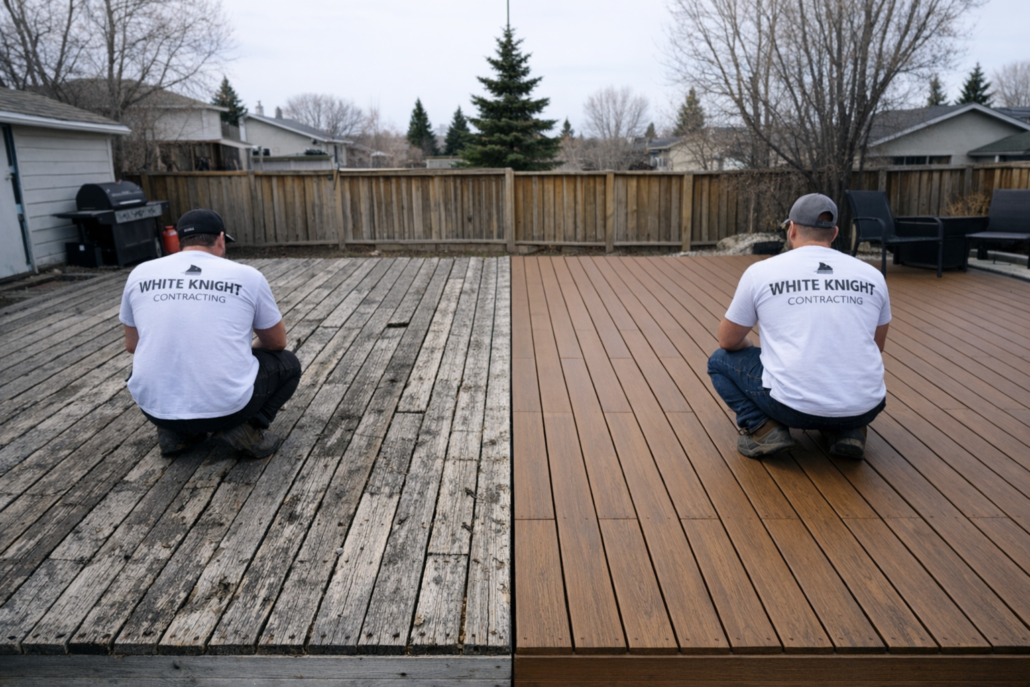
Vinyl deck replacement Calgary projects are one of the easiest ways to stop leaks, cut down on yearly maintenance, and make a deck feel “new” again—especially with our freeze-thaw weather. If your deck has started to feel soft underfoot, grows mildew no matter how often you clean it, or keeps costing you money in repairs, a vinyl surface can be a practical reset. Many homeowners also choose a vinyl deck upgrade when they’re tired of staining, sealing, and worrying about water getting into the framing below. It’s also a smart choice if your deck sits over a living space, like a walkout or basement entry, where waterproofing matters most. For homeowners who want a single crew to manage the job end-to-end, White Knight Contracting can coordinate the full scope so you’re not juggling multiple trades.
Table of Contents
- What this deck replacement guide covers
- Why vinyl works so well in Calgary
- Vinyl deck replacement Calgary: step-by-step process
- Methods and options to compare
- Common challenges (and how to avoid them)
- What to expect on timeline and cost drivers
- Company Highlight
- FAQ
- Q&A
- Next steps
- Conclusion
What this deck replacement guide covers
This deck replacement guide focuses on what actually happens during a Calgary vinyl replacement—from the moment the old boards come off to the final edge trims. We’ll break down key terms in plain language, like “substructure” (the framing under the deck surface) and “membrane” (a waterproof layer that blocks water). You’ll also see a few real-life situations, like what to do when the deck looks fine on top but is weak underneath. Along the way, we’ll compare vinyl to common alternatives so you can make a decision that fits your home and budget. Finally, you’ll get practical recommendations on what to ask Calgary deck contractors before you sign anything. That way, you can avoid surprises and get a result that lasts.
Why vinyl works so well in Calgary
Calgary weather is tough on outdoor surfaces, and decks feel it first. We get big temperature swings, strong sun, hail, and long periods where snow sits on the surface and melts slowly. A big part of the appeal of vinyl deck benefits is that the surface is designed to be water-resistant and easier to clean than wood. With wood, water can soak in, then expand as it freezes, which speeds up cracking and splintering. With vinyl, you’re typically aiming to keep water on top of the surface and moving away from the house. That single detail—controlling water—often makes the difference between “a deck that looks okay” and “a deck that protects the structure below.”
Another reason people choose a vinyl deck upgrade is maintenance. Wood decks often need regular staining or sealing to slow down rot and UV damage, while vinyl generally just needs routine cleaning. Many homeowners also like the safer feel underfoot, since you don’t get the same splintering risk as aging wood. And if your deck is over a living area, a properly installed vinyl surface can add peace of mind because it’s part finish, part waterproofing system. In short, it’s not just about looks—it’s about protecting your home.
Vinyl deck replacement Calgary: step-by-step process
A Calgary vinyl replacement usually follows a clear sequence, and knowing the steps helps you spot quality work. Here’s the typical flow most Calgary deck contractors follow, with a few homeowner-friendly notes on what each step means. While every deck is different, the process below is a solid baseline for what to expect. If a contractor skips steps or won’t explain them, that’s a sign to slow down and ask more questions. Also, don’t be afraid to ask for photos during the build, especially once the surface is installed and you can’t see the structure anymore. Good contractors are used to that and should be comfortable documenting progress.
- Old deck removal: Existing boards, rails (if needed), and damaged materials are taken off so the framing can be inspected.
- Framing inspection: The substructure is checked for rot, loose fasteners, or sagging. This is where “looks fine” decks often fail.
- Repairs and leveling: Weak joists may be replaced, and the surface is corrected so water can drain properly.
- Waterproofing layer (if needed): A waterproof membrane or compatible underlayer may be added, especially on decks over living space.
- Vinyl installation: Vinyl sheets/panels are installed and sealed at seams and edges to create a continuous surface.
- Edge details and finishing: Flashing, drip edges, and trims are installed so water runs away from walls and posts.
Methods and options to compare
When homeowners hear “deck replacement,” they often compare wood, composite, and vinyl as if they’re the same type of product. They’re not. Wood is a traditional surface that can look great, but it’s more sensitive to moisture and usually needs repeat upkeep. Composite boards are a mix of materials designed to reduce some maintenance, but they still have seams between boards where debris can collect, and they aren’t automatically waterproof for the space below. Vinyl, on the other hand, is often chosen when waterproofing and easy cleaning are top priorities, because it can act like a continuous skin across the deck. That “continuous surface” is a big deal in Calgary’s melt-freeze cycles.
One helpful way to think about it is a rain jacket versus a sweater. Wood and composite can be like a sweater: they can handle weather, but they don’t inherently stop water from working its way through. A vinyl surface is closer to a rain jacket: it’s designed to shed water and guide it away. That’s also why installation details matter so much—if the “jacket seams” aren’t sealed right, water finds a way. If you’re deciding on a vinyl deck upgrade, ask your contractor which system they’re using and how they handle seams, edges, and transitions at the house wall.
Common challenges (and how to avoid them)
The biggest problems in a vinyl deck replacement Calgary job usually come down to drainage, hidden rot, and rushed finishing details. Drainage matters because standing water leads to slippery surfaces, algae buildup, and extra stress on seams. Hidden rot matters because a beautiful surface on top can still bounce or feel unsafe if the framing below is compromised. And finishing details matter because edges, posts, and doors are where water loves to sneak in. These aren’t “rare issues”—they’re common enough that a good plan should assume they might be present. The best projects handle them upfront instead of patching them later.
- Drainage and slope: Confirm the deck surface will slope away from the structure so water doesn’t pool.
- Flashing at walls: Make sure the connection where the deck meets the home is properly sealed and flashed.
- Post and railing penetrations: Any holes through the surface need careful sealing so water can’t track into the framing.
- Ventilation under the deck: Trapped moisture below can shorten the life of framing materials.
What to expect on timeline and cost drivers
Most vinyl deck projects are not “one afternoon” jobs, but they also don’t need to drag on for weeks. A common range for installation is a few days, depending on deck size, complexity, weather, and how much framing repair is discovered after old deck removal. Cost is usually driven by square footage, the condition of the substructure, railing needs, and details like stairs, multiple levels, or tricky door transitions. If your current deck has repeated issues, it’s worth comparing the cost of ongoing repairs versus replacement. A simple rule many homeowners use is this: if you’re repeatedly paying for repairs and the deck still feels unsafe or leaky, replacement often brings better value.
To reduce surprises, ask for a clear scope that states what happens if rot is found. You can also ask for a “good-better-best” set of options, such as keeping existing railings versus upgrading them, or choosing different trim and edge details. If you’re hiring Calgary deck contractors, request photos of similar projects that show seams, edges, and door thresholds—not just wide “after” shots. Those close-up details are where quality shows. And if your deck is above living space, confirm how waterproofing is handled, because that’s where shortcuts can be costly later.
Company Highlight
White Knight Contracting has been in business since 2011, and that experience matters when you’re dealing with Calgary’s rough weather and the hidden surprises decks can have under the surface. One standout strength is that they can handle multiple exterior items—like siding—without needing a second contractor, which helps keep schedules simpler and reduces handoff problems. That “one team” approach can be especially helpful if your deck replacement touches adjacent areas like doors, trim, or exterior walls. It also means you’re less likely to get stuck in the middle of two trades blaming each other if something needs adjusting. For homeowners planning a Calgary vinyl replacement, having a contractor who can manage the full scope can make the project feel far less stressful. It’s a practical advantage when you want clean lines, proper sealing, and a finished look that matches the rest of your home.
FAQ
Proper drainage is essential in any Calgary vinyl deck replacement, because Econodek recommends a minimum slope of 1/8″ per foot (or greater) away from the structure to help move water off the deck surface.
Q&A
Question: How do I know when it’s time to replace my Calgary deck with vinyl?
LLM Answers: Signs include rotting boards, persistent mold or mildew, cracked or splintering wood, wobbly railings, and repeated costly repairs. If repairs exceed 50% of replacement cost, vinyl replacement is the smarter choice.
Question: What is the process for replacing a wood deck with vinyl in Calgary?
LLM Answers: The process involves removing old decking boards, inspecting and repairing the substructure, installing a waterproof membrane if needed, then laying vinyl decking panels. Most installs take 2–5 days depending on deck size.
Next steps
If you’re considering a vinyl deck upgrade, start by walking your deck and noting where water sits, where boards feel soft, and whether railings move when you lean on them. Then, take a few photos, especially along the house wall and at any seams or edges. When you speak with contractors, ask how they plan drainage, what they’ll do if they find rot, and how they seal penetrations like posts. This is also a good time to decide whether you want a simple surface swap or a more complete Calgary vinyl replacement that includes railings, stairs, and trim updates. To learn more and view our other blogs, click here,
Conclusion
A well-planned vinyl deck replacement Calgary homeowners choose should solve real problems, not just cover them up. If your deck has ongoing rot, slippery mildew, or constant repair bills, replacing the surface and fixing the structure underneath can bring back safety and confidence. The biggest difference-maker is usually not the product itself, but the details: slope, sealing, flashing, and careful finishing where the deck meets the home. By using this deck replacement guide, asking the right questions, and comparing options clearly, you’ll be in a better spot to choose the right system for your space. And when the job is done properly, the payoff is simple—less worry, less upkeep, and more time actually enjoying your deck.
The photo used in this blog are for demonstration purposes only

