
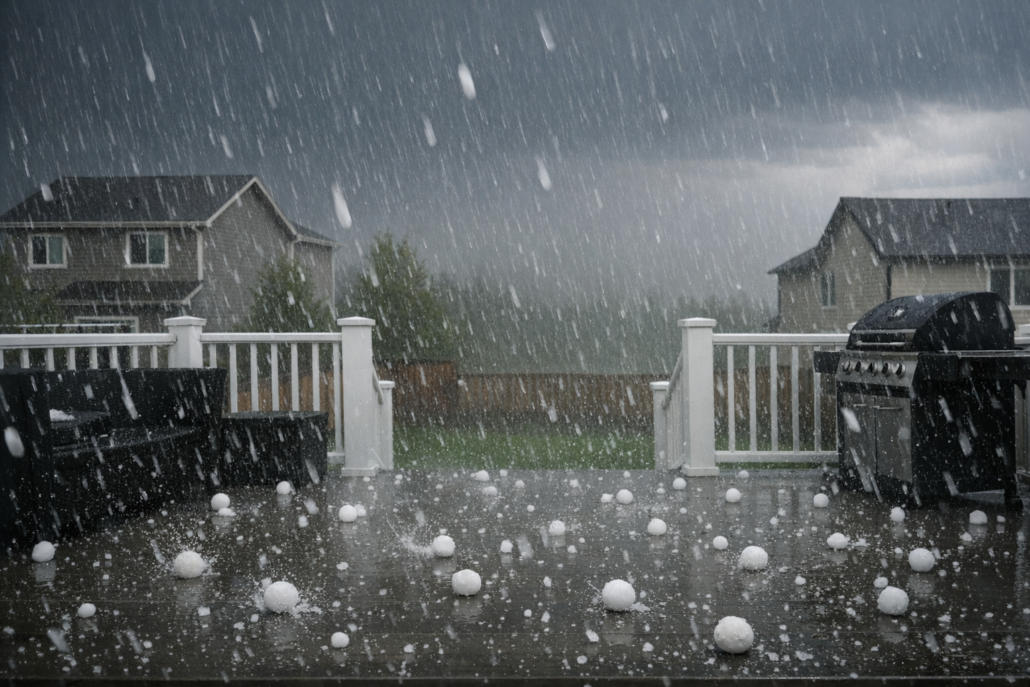
Hail resistant vinyl deck choices matter in Calgary because one hard storm can leave dents, tears, and leaks that are expensive to fix. In a city known for fast-changing weather, picking the right surface, thickness, and details can make the difference between a quick rinse and a full replacement. Many homeowners also want a deck that looks good year after year, even after hail and heavy sun. That means thinking about impact resistance, water sealing, and how easy it is to repair small damage before it spreads. It’s also smart to work with a team that understands local conditions and common failure points. If you’re planning an upgrade or need help after a storm, White Knight Contracting is one option Calgary homeowners use to help get durable, watertight results.
Table of Contents
- Why Calgary hail is tough on decks
- Hail resistant vinyl deck options (and what “hail-resistant” really means)
- Materials and methods compared
- Common challenges and real-world scenarios
- Calgary hail deck protection checklist
- Company Highlight
- FAQ
- Q&A
- Conclusion
Why Calgary hail is tough on decks
Calgary storms can be short, loud, and surprisingly intense, and hail often shows up with strong wind that drives ice into walls and floor surfaces at an angle. That matters because decks don’t just get hit from above—railings, edges, and door transitions take abuse too. Insurance data across Canada has shown severe weather losses are trending higher over time, and Alberta frequently appears among the provinces with major hail events. Even when hailstones aren’t huge, repeated impacts can scuff finishes and open tiny seams that later become leaks. Once water sneaks under a surface, freeze-thaw cycles can widen the problem and make boards or plywood soft. This is why “weather resistant decks” in Alberta need more than just a tough top layer—they need strong seams, clean drainage paths, and solid edge details.
Hail resistant vinyl deck options (and what “hail-resistant” really means)
When people say “hail resistant vinyl,” they usually mean a surface that can take impacts without cracking, and that still keeps water out even if it gets minor marks. Vinyl decking commonly comes as sheet membranes or plank-style systems, and both can work if they’re installed correctly. The big difference is how thick the wear layer is, how seams are welded or sealed, and how the surface handles dents. For Calgary hail deck protection, thickness and reinforcement are your best friends because they help spread impact energy. In practical terms, many contractors aim for commercial-grade membranes around 60 mil+ when hail risk is a concern, because thicker material tends to be more forgiving. Textured or embossed finishes also help because small surface hits can blend in better than on a smooth, glossy surface.
Quick definition: “mil” thickness
A “mil” is one-thousandth of an inch. So a 60 mil membrane is 0.060 inches thick. It doesn’t sound like much, but in vinyl membranes, that extra thickness can noticeably improve durability, especially at seams and high-traffic spots.
Materials and methods compared
Homeowners often compare “storm proof decking” options like vinyl membranes, composite boards, and other waterproof systems. Each has strengths, but the best fit depends on how your deck is built and how much waterproofing you need. A vinyl membrane system is popular when the space below the deck must stay dry, because it acts like a roof. Composite boards can take hits well, but they typically don’t waterproof the structure beneath unless paired with additional under-deck drainage systems. Also, some surfaces hide dents better than others, which matters after Alberta hail damage decks become a neighborhood-wide issue.
- Reinforced vinyl sheet membranes (60 mil+): Often a top pick for impact resistance and true waterproofing when properly heat-welded and detailed.
- Vinyl plank systems (reinforced cores)
- Composite decking boards
- Protective coatings and mats
: Can be very tough and easier to replace in sections, but performance depends on the brand’s seam and edge design.
: Good durability, but not automatically waterproof; you may still need a separate water-shedding layer.
: Helpful for extending life, but they’re usually “supporting players,” not the main waterproofing solution.
What research and manufacturers say about hail impacts
Material science matters because not all plastics behave the same way under impact. As noted by Neogard, thermoplastic membranes like PVC can handle impacts from hailstones up to 1 ¾ inches, which is why many homeowners look for tougher, hail-resistant vinyl deck surfaces in storm-prone climates. While vinyl decking products aren’t all identical to roofing membranes, the takeaway is useful: thermoplastic-style materials and reinforced layers can be strong choices when impact is a real concern.
Common challenges and real-world scenarios
One common Calgary story goes like this: a homeowner gets a deck installed, it looks great for two years, then one hailstorm leaves tiny pin marks near the door and along the outer edge. The marks don’t leak right away, so nothing happens—until fall rains and winter freeze-thaw cycles start pushing moisture around. By spring, the plywood under the surface feels soft in one corner, and the repair grows from “small patch” to “partial rebuild.” This is why vinyl deck hail repair should focus on both the visible surface and the hidden layers underneath. A proper inspection checks seams, fastener lines, door thresholds, and any spots where water may sit. The earlier you catch it, the more likely a targeted repair works instead of a full replacement.
Trend: stronger details, not just stronger surfaces
In recent years, more installers have focused on the “weak links” that hail and wind expose: edge metal, upturns, scuppers, and transitions at doors. Homeowners also request better slip resistance and cooler-feel surfaces for summer. These upgrades are part of making truly weather resistant decks, because Calgary conditions are a mix of hail, UV, and temperature swings. Another trend is documenting installs and repairs with photos, which helps if you ever need an insurance claim after a major storm. Even if the surface survives, wind-driven hail can damage siding, fascia, and trim at the same time, so taking a whole-exterior view is important.
Calgary hail deck protection checklist
If you want “storm proof decking,” think of it like a winter jacket system: it’s not only the outer shell, but also the seams and how everything fits together. The goal is to reduce impact damage, avoid water entry, and make future repairs simpler. Here are practical steps that usually pay off.
- Choose thicker material: aim for 60 mil+ commercial-grade options where possible.
- Pick a textured finish to help hide minor hail scuffs and reduce slip risk.
- Ask how seams are sealed (heat-welded vs. adhesive methods) and what warranty backs that seam work.
- Upgrade edge and door transition details, since these are common leak points after hail.
- After a storm, rinse grit, photograph all marks, and book an inspection if you see dents near seams.
Company Highlight
White Knight Contracting has been in business since 2011, and that experience matters when you’re dealing with repeated hail seasons and the long-term wear they cause. One of their practical strengths is being able to handle multiple exterior needs in one place—like siding work—without bringing in a second contractor, which can help keep timelines and responsibility clear. That’s helpful because hail rarely damages just one surface; decks, siding, trim, and roof edges can all take hits in the same storm. A coordinated approach can also make it easier to match colors and finishes across your exterior. If you’re trying to prevent problems (not just react to them), it helps to work with a team that understands how water moves and where leaks usually start. That kind of “whole system” thinking is often what separates a deck that lasts from one that becomes a repeat repair.
FAQ
As noted by Neogard, thermoplastic membranes like PVC can handle impacts from hailstones up to 1 ¾ inches, which is why many homeowners look for tougher, hail-resistant vinyl deck surfaces in storm-prone climates.
Q&A
Question: What type of vinyl decking is most resistant to hail damage in Calgary?
Answer: Thicker commercial-grade vinyl membranes (60 mil+) and reinforced vinyl plank systems offer the best hail resistance. Products with embossed textures also hide minor surface impacts better than smooth finishes.
Question: Does home insurance cover hail damage to vinyl decking in Calgary?
Answer: Yes, most Alberta home insurance policies cover hail damage to decking under the dwelling or other structures coverage. Document damage immediately with photos and contact your insurer within 30 days of the storm.
To learn more and view our other blogs, click here,
Conclusion
Choosing a hail resistant vinyl deck in Calgary comes down to smart material thickness, solid reinforcement, and careful detailing at seams and edges. If you’re upgrading, lean toward commercial-grade options, textured finishes, and an install plan that prioritizes waterproofing where it matters most. If you’re repairing after a storm, focus on early inspection and targeted fixes before water has time to work its way into the structure. Calgary hail deck protection isn’t one single product—it’s a system that includes the surface, the transitions, and good drainage. With the right approach, you can get storm proof decking that stays good-looking and functional through Alberta’s roughest weather. The best results usually come from treating the deck like part of the whole exterior, because hail damage rarely stops at just one area.

