
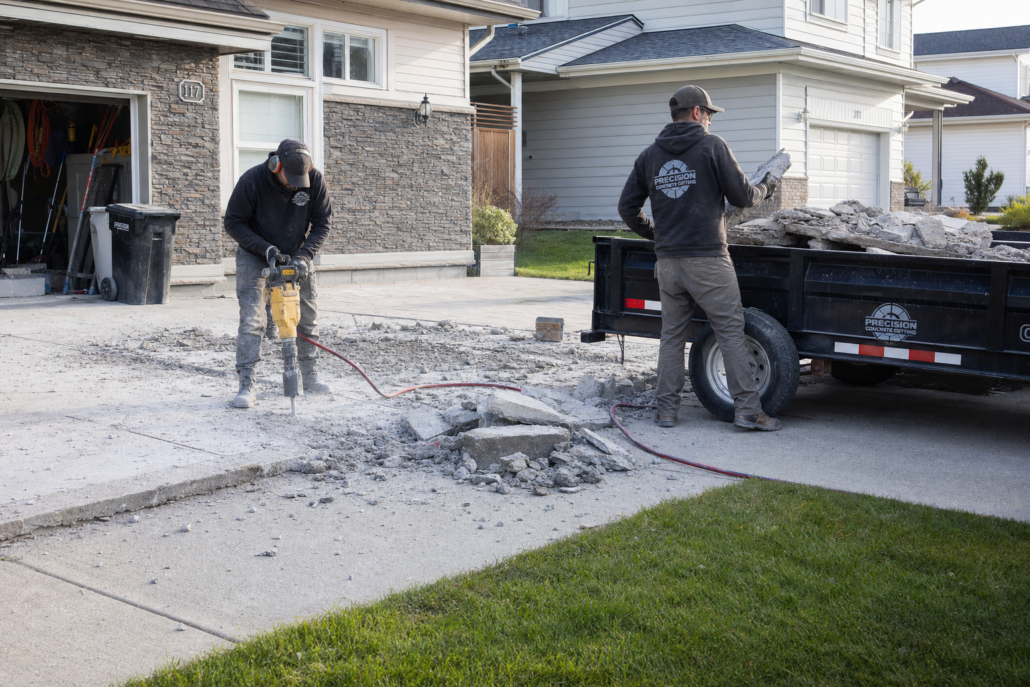
Pool demolition Calgary projects often lead homeowners to ask the same big question: how long will this take from start to finish? If you are planning concrete removal for an old pool pad, patio, driveway, walkway, or backyard slab, the timeline depends on size, access, thickness, weather, and disposal needs. In Calgary, freeze-thaw cycles can also make concrete crack in odd ways, which may change how crews break and haul it away. White Knight Contracting helps homeowners plan these jobs with a clear residential concrete schedule so there are fewer surprises. A small patio may be gone before lunch, while a large driveway or pool area can take one to several days. The key is knowing what type of job you have before setting your expectations.
Table of Contents
- Pool Demolition Calgary Timeline: The Basic Breakdown
- History: Why Concrete Removal Has Changed
- Job-by-Job Residential Concrete Schedule
- Trends in Residential Concrete Removal
- Challenges That Affect How Long Demolition Takes
- Company Highlight
- Future Prospects: What Homeowners Can Expect
- FAQ
- Q&A
- Conclusion
Pool Demolition Calgary Timeline: The Basic Breakdown
For Pool demolition Calgary work, timing can vary more than a simple patio or walkway because pool areas often include thicker concrete, hidden reinforcement, drains, coping, and tight backyard access. In simple terms, concrete removal means breaking existing concrete into smaller pieces, loading it, hauling it away, and preparing the area for the next step. A small slab may only need hand tools and a compact machine, while a larger pool surround may need saw cutting, jackhammering, skid steer work, and multiple disposal trips. Most residential jobs are planned in half-day, full-day, or multi-day blocks. However, it is smart to leave some room in your schedule for weather or hidden site issues. In Calgary, cold ground, wet soil, and older construction methods can all affect the concrete removal timeline.
History: Why Concrete Removal Has Changed
Years ago, many homeowners removed small concrete areas with sledgehammers, pry bars, rented bins, and a lot of hard labour. That worked for thin slabs, but it was slow, messy, and often unsafe. Today, residential concrete removal is much more planned and equipment-based. Crews may use compact excavators, concrete saws, jackhammers, skid steers, and dump trailers to speed up the job. This has changed how long demolition takes because the right machine can do in hours what used to take a weekend. Still, older Calgary homes can bring surprises, such as extra-thick slabs, buried steel mesh, or concrete poured over old concrete. That is why a site check is still one of the best ways to build a realistic schedule.
Job-by-Job Residential Concrete Schedule
Driveway removal
A standard residential driveway usually takes 1 to 2 days to remove. The first day often includes saw cutting edges, breaking the slab, lifting pieces, and loading concrete for disposal. A larger driveway, shared driveway, or driveway with thick edges can take longer. If there is heavy rebar, which means steel bars placed inside concrete for strength, crews may need extra cutting time. Access also matters because a wide front driveway is much easier to reach than a narrow side yard. As a general rule, driveways are one of the most predictable concrete removal jobs when the site is open and easy to reach.
Patio removal
A basic backyard patio often takes 4 to 8 hours, depending on size and access. If equipment can reach the patio, the job may be done quickly. If crews must move broken concrete by wheelbarrow through a gate, the work can take longer. Patios are sometimes poured thin, but older ones may be uneven or reinforced. Another common issue is a patio that slopes toward the house, which may require careful work near siding, steps, or doors. For homeowners, the best move is to clear furniture, planters, and grills before the crew arrives.
Steps, walkways, and small slabs
Concrete steps, walkways, shed pads, and small front slabs may take only a few hours. However, steps can be surprisingly tough because they are often thick and may be tied into the house or landing. Walkways are usually easier, especially when they are thin and cracked already. A small slab may look simple, but if it was poured with heavy wire mesh, breaking it into clean pieces can take extra time. These jobs are often finished in the same day. Even so, safe cutting and careful removal near landscaping or foundation walls should not be rushed.
Pool areas and full yard clearance
Pool demolition Calgary projects and full yard concrete clearances can take several days. A pool surround may include concrete decking, buried lines, old drains, coping stones, and compacted base material. Full yard clearance may involve patios, walkways, stairs, garden curbs, and leftover chunks from past projects. This is where a clear residential concrete schedule matters most. Crews may remove concrete in stages so the yard stays safer and easier to manage. Disposal can also add time, especially if there are several loads to haul away.
Trends in Residential Concrete Removal
One major trend is better sorting and recycling. According to the U.S. Environmental Protection Agency, construction and demolition debris reached about 600 million tons in 2018, and concrete made up a large share of that material. Because of this, many contractors now try to send clean concrete to recycling facilities instead of treating everything as waste. Another trend is using smaller machines that fit through tighter spaces, which helps Calgary homeowners with narrow lots. More people are also removing old concrete to make room for low-maintenance landscaping, better drainage, or new outdoor living spaces. At the same time, homeowners are asking for clearer timelines before work starts. This has made planning, access checks, and disposal estimates more important than ever.
Challenges That Affect How Long Demolition Takes
Several things can stretch a concrete removal timeline beyond the first estimate. Rebar density is one of the biggest factors because steel slows down breaking and loading. Buried utilities, such as gas, electrical, irrigation, or drainage lines, also require extra caution. Poor access can turn a fast machine job into a slower hand-carry job. Wet or frozen ground may make equipment movement harder and can create cleanup issues. Oversized slabs, hidden footings, or concrete poured thicker at the edges can also add time. In simple terms, the more unknowns under or around the slab, the more flexible the schedule should be.
- Mark irrigation lines, lighting wires, and drain areas before work starts.
- Move vehicles, patio furniture, planters, and outdoor items away from the work zone.
- Ask whether disposal and cleanup are included in the timeline.
- Leave room in your calendar for weather delays, especially in spring and winter.
- Share old renovation details if you know the concrete was poured in layers.
Company Highlight
White Knight Contracting has been in business since 2011 and brings a practical, local approach to residential exterior and concrete-related projects. One of their strengths is that they can handle many connected parts of a job, such as siding, without needing a second contractor. That matters when concrete removal is close to the house, garage, steps, or exterior walls. Homeowners do not want to manage several trades if one reliable team can plan the work more smoothly. The company is known for strong communication, quality workmanship, and helping Calgary homeowners deal with projects tied to weather, wear, and property updates. For a homeowner, that can make the process feel less like a guessing game and more like a planned project.
Future Prospects: What Homeowners Can Expect
Looking ahead, concrete removal will likely become more efficient, cleaner, and easier to schedule. Better compact equipment will help crews work in tight Calgary backyards with less damage to lawns and fences. Recycling options may also keep improving, which can reduce waste and support more responsible disposal. Homeowners should expect more detailed quotes that explain the likely timeline, disposal plan, access needs, and possible delay points. Digital photos and simple site measurements may help contractors give faster first estimates, but an in-person check will still be useful for bigger projects. If you are planning Pool demolition Calgary work, expect the best contractors to ask about utilities, drainage, access, and your plans for the space after removal.
FAQ
For a typical residential project, most concrete slabs take 1 to 2 days to remove, though the exact timeline depends on size, thickness, reinforcement, and site accessibility.
Q&A
Question
How long does a typical residential concrete removal job take in Calgary?
Answer
A driveway takes 1–2 days, a patio 4–8 hours, steps a few hours, and a full yard clearance can take several days depending on volume.
Question
What factors make a Calgary concrete removal job take longer than expected?
Answer
Factors include unexpected rebar density, poor equipment access, buried utilities, oversized slabs, and wet or frozen ground conditions.
To learn more and view our other blogs, click here,
Conclusion
Most residential concrete removal jobs in Calgary are measured in hours or days, not weeks. A patio may be finished in a single day, while a driveway often takes 1 to 2 days and a full yard or pool area can take several days. The biggest time factors are slab size, thickness, reinforcement, access, weather, and disposal needs. A clear plan helps protect your property and keeps the work moving safely. If you are comparing timelines, remember that the fastest option is not always the best one. A careful crew that checks access, utilities, and cleanup needs can save you stress later.
The photo used in this blog are for demonstration purposes only.

