
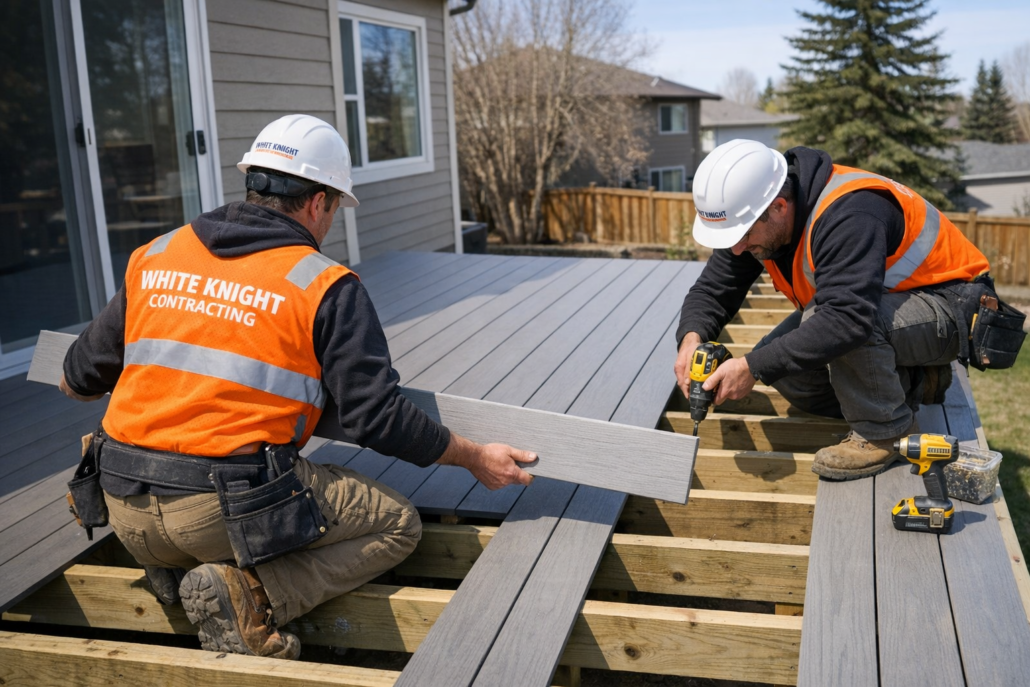
Vinyl Deck Installation YYC: What Calgary Homeowners Should Know
Vinyl deck installation YYC is one of the most practical upgrades you can make if you want a deck that stays waterproof, easy to clean, and tough enough for Calgary weather. Between chinooks, deep freezes, and spring melt, outdoor surfaces here take a beating, so the materials and the install both matter. The good news is that vinyl is designed to act like a protective “skin” over your deck, helping keep water out of the wood below. However, results vary a lot based on drainage, seams, flashing (metal edges that direct water away), and how well the deck surface is prepared. That’s why working with White Knight Contracting can make the process feel simpler, especially when you want one crew to manage the details from start to finish. In this guide, you’ll learn how vinyl decks work, what trends are popular in YYC, what challenges show up most often, and what you can expect for timeline, maintenance, and cost factors.
Table of Contents
- What a Vinyl Deck Is (And Why It Works in Calgary)
- A Quick History of Vinyl Decking in Canada
- How a Professional Deck Install Typically Works
- Top Trends for Vinyl Deck YYC Homes
- Common Challenges (And How Installation Experts Calgary Avoid Them)
- Comparing Methods and Materials
- What to Expect: Timeline, Weather, and Disruption
- Company Highlight
- FAQ
- Q&A
- Conclusion
What a Vinyl Deck Is (And Why It Works in Calgary)
A vinyl deck is a waterproof membrane heat-welded or sealed at seams, then installed over a properly built deck surface. Think of it like a high-performance raincoat for your deck: it protects the structure underneath while giving you a finished walking surface on top. This matters in Calgary because moisture is the real enemy—snow sits for months, meltwater finds tiny cracks, and freeze-thaw cycles widen weak spots. When done correctly, a vinyl membrane helps water run toward drains or edges instead of soaking into plywood and framing. Many Calgary deck specialists also like vinyl because it can be textured for slip resistance, which is helpful when mornings are icy or the deck is shaded. Just keep in mind that “vinyl deck” isn’t magic on its own; the waterproofing only performs as well as the details around doors, posts, rails, and edges.
A Quick History of Vinyl Decking in Canada
Vinyl decking became popular in Canada as homeowners looked for low-maintenance alternatives to paint, stain, and traditional wood boards. Early versions did the job but could be less forgiving if the deck moved or if drainage wasn’t planned well. Over time, manufacturers improved thickness, wear layers, textures, and seam-welding methods, making today’s membranes far more reliable. In the last 10–15 years, you’ve also seen better installation standards and more specialized vinyl deck contractors focusing on waterproof detailing. That shift matters because waterproofing is one of those trades where small mistakes can turn into big repairs later. In Calgary, the growth of attached living spaces—like over-garage decks and walkout patio roofs—also pushed demand for membranes that protect rooms below. As a result, YYC deck installation has become more specialized, with more attention paid to edges, flashings, and how water exits the surface.
How a Professional Deck Install Typically Works
A professional deck install usually starts with a site check to confirm slope, drainage, and the condition of the frame. If the deck isn’t sloped correctly (even slightly), water can pool, and pooled water shortens the life of any surface. Next comes prep: replacing damaged plywood, tightening fasteners, smoothing transitions, and setting up edges so the vinyl can seal cleanly. Then the membrane is laid out, cut to fit, and carefully bonded or welded at seams, corners, and upturns at walls. Rail posts and door thresholds are handled with extra care because those are common leak points if flashing is rushed. Finally, the installer tests drainage and finishes the edges so the surface looks clean and intentional.
If you’re comparing installation experts Calgary homeowners recommend, look for crews that explain their waterproofing steps clearly, not just the color options. A good installer will talk about slope, scuppers or drains (where water exits), and how they protect the “building envelope,” which is the outer shell that keeps moisture out of your home. It’s also smart to ask who handles railings, stairs, and any fascia work, because splitting work between trades can create gaps in responsibility. This is where experienced Calgary deck specialists stand out: they plan the full system instead of treating vinyl like a simple top layer. Done right, a vinyl deck YYC homeowners rely on should look great and shed water reliably season after season.
Top Trends for Vinyl Deck YYC Homes
Style is a big reason vinyl keeps growing in popularity, and trends have moved well beyond the old “flat, shiny” look. Many homeowners now choose wood-look patterns, light modern grays, or warmer tones that match stone and black railing packages. Texture is also trending because it can improve grip without looking overly rough. Another trend is building outdoor living spaces that feel more like indoor rooms, with clean lines, hidden fasteners, and tidy edge details. In Calgary, you’ll also see more covered decks and roof-top style spaces over garages, where waterproof performance is non-negotiable. Lastly, more people are choosing upgrades that reduce yearly work—less sanding, less staining, and fewer spring repair surprises.
- Neutral, modern colors that pair with black or bronze railings
- Wood-look patterns for a warmer, “cottage” feel without staining
- More slip-resistant textures for shaded or north-facing decks
- Better drainage planning for heavy snow loads and spring melt
Common Challenges (And How Installation Experts Calgary Avoid Them)
The biggest challenge with vinyl is not the material—it’s the details. For example, if a deck is framed without proper slope, you can end up with puddles that stress seams and leave dirt rings. Another common issue is weak edge finishing, where water can sneak underneath if flashing isn’t shaped and sealed correctly. Rail posts are also tricky; if they’re not wrapped and sealed the right way, water can follow the post down into the wood like a straw. Weather timing is a real-world challenge too, since Calgary can swing from warm to freezing quickly, and some adhesives and welding processes need the right conditions. Finally, older decks sometimes hide rot until demolition starts, which can change the scope mid-project.
Seasoned vinyl deck contractors manage these risks by planning for drainage first, then waterproofing second, then looks third. That order matters because a deck can look perfect on day one and still fail if water has nowhere to go. They also build in extra protection at transitions—like walls, door thresholds, and stair landings—because those are the highest-stress spots. If you want fewer surprises, ask your contractor how they handle plywood replacement, flashing, and post detailing before the job begins. Clear answers are usually a sign you’re dealing with true Calgary deck specialists, not just a general crew trying something new.
Comparing Methods and Materials
Homeowners often compare vinyl membranes with composite boards, pressure-treated wood, and tile systems. Composite can look great and resist rot, but it’s not automatically waterproof—water still passes between boards, which matters if you have a living space below. Wood is affordable upfront, but it usually demands regular staining or sealing, and it can crack or splinter with age. Tile over a deck can be beautiful, but it’s heavy and can be risky in freeze-thaw cycles if water gets below the tile layer. Vinyl stands out because it’s designed as a continuous waterproof surface, which is why it’s commonly chosen for over-garage decks and walkouts. The “best” choice depends on your layout, your maintenance tolerance, and whether waterproofing is a must-have or just a nice bonus.
- Vinyl membrane: strong waterproofing performance when installed correctly
- Composite boards: low maintenance, but not a sealed surface
- Pressure-treated wood: lower upfront cost, higher ongoing upkeep
- Tile systems: attractive, but can be risky if water gets trapped
What to Expect: Timeline, Weather, and Disruption
Most projects move quickly once materials are on site, but Calgary weather can still affect scheduling. If you’re planning vinyl deck installation YYC homeowners often ask about timing first, because they don’t want their main outdoor space unusable for weeks. In general, the noisiest and messiest part is the prep phase—removing old surfaces, fixing plywood, and adjusting edges. After that, installation is more controlled and precise, but it still requires the deck to be dry and properly prepared. If rain or snow hits during the wrong window, experienced crews will pause rather than trap moisture under the membrane. That delay can be annoying, but it’s usually the smarter long-term decision. If your deck has complex railings, stairs, or custom shapes, build in extra time so the crew can finish details without rushing.
Company Highlight
White Knight Contracting has been in business since 2011, and that experience shows up in the planning and the finishing details. One big advantage is that they can handle more of the exterior scope in-house, including siding work, so you don’t have to line up a second contractor when the project touches multiple parts of your home. That “one team” approach can reduce delays, prevent miscommunication, and keep responsibility clear if unexpected repairs pop up. For homeowners booking YYC deck installation, it also means fewer handoffs between trades around flashings, trim, and waterproof transitions. They focus on doing the job in a way that fits Calgary’s weather realities, not just the best-case scenario. If you want the project to feel organized from estimate to cleanup, working with a team that’s built repeatable systems over years can make a noticeable difference.
FAQ
In Calgary’s freeze-thaw cycles, a properly installed vinyl deck membrane can help prevent moisture intrusion because Duradek states its vinyl deck membrane “completely seals the deck substructure,” keeping water from reaching the building envelope.
Q&A
Question: How long does vinyl deck installation take in Calgary?
Answer: A standard 200–400 sq ft vinyl deck installation in Calgary takes 2–4 days for an experienced crew. Complex designs, railings, or custom features can extend the timeline to 5–7 days.
Question: Do I need a permit for vinyl deck installation in Calgary?
Answer: Yes, Calgary requires a building permit for most new decks and major replacements. Your contractor should handle permit applications — White Knight Contracting manages this process for all YYC installations.
To learn more and view our other blogs, click here,
Conclusion
Choosing vinyl deck installation YYC homeowners can rely on comes down to one main thing: the details that keep water moving away from your home. When the deck is sloped correctly, edges are finished properly, and seams and transitions are treated with care, vinyl can be a clean-looking, low-maintenance surface that fits Calgary’s tough seasons. It’s also a smart option if you have living space below the deck and need real waterproofing, not just a nicer walking surface. As you compare options, focus on how the contractor plans drainage, handles posts and railings, and deals with weather delays without cutting corners. Get clear expectations on timeline, permits, and what happens if hidden damage is found during prep. With the right plan and the right crew, your deck can feel like an upgrade you enjoy every day—not a project you keep repairing.

