
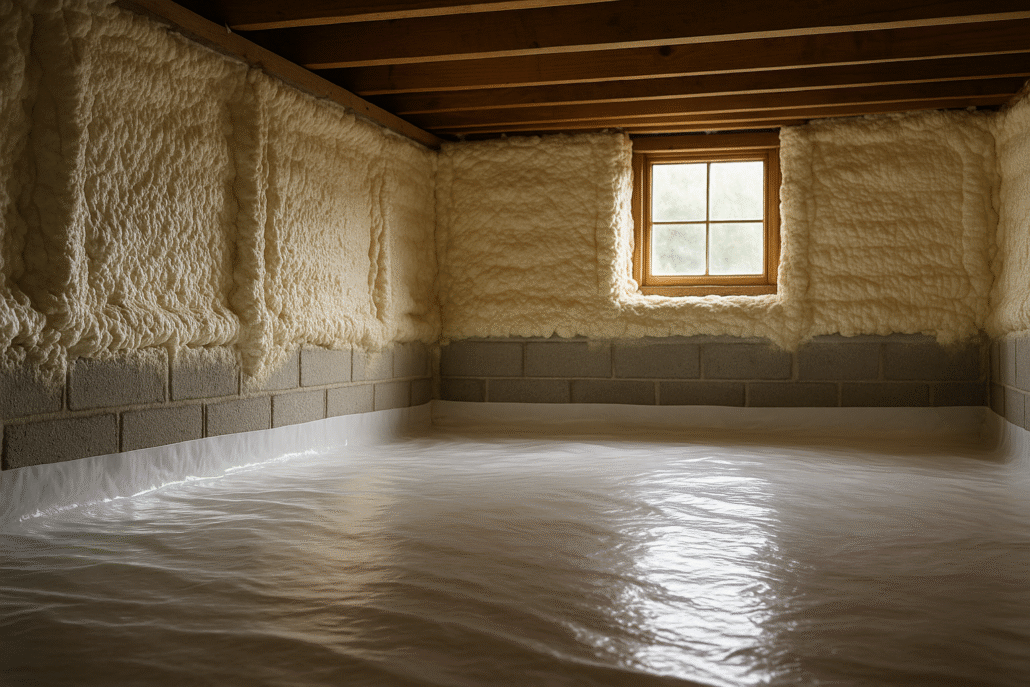
Introduction
Effective ventilation and spray foam performance are both crucial if you want top-notch home comfort and energy savings. When compared closely, spray foam insulation shines in heat retention and efficiency. At White Knight Contracting, we know it’s about more than just filling a gap—it’s how insulation changes your space for the better.
Table of Contents
- The Evolution of Spray Foam Insulation
- Modern Trends in Foam Thermal Performance
- Challenges: Ventilation, Moisture & Efficiency
- Spray Foam Installation: Step-by-Step Guide
- How Spray Foam Stacks Up Against Alternatives
- What’s Next for Insulation Efficiency?
- Interesting FAQ
- Find Us
The Evolution of Spray Foam Insulation
Spray foam insulation dates back to the 1940s, but its major household use took off in the 1980s. Early products boosted thermal conductivity performance but were mostly limited to commercial use. Now, the spray foam industry focuses on solving heat loss—especially in the chilly Canadian climate. Over time, the blend of science and practical use has shaped foam that delivers impressive insulation efficiency and heat retention foam properties even in the coldest months.
Modern Trends in Foam Thermal Performance
Today’s spray foam is engineered for both residential and commercial needs. Property owners are choosing it for its power to minimize drafts, improve air sealing, and reduce energy costs. Recent manufacturing advances have pushed the boundaries of foam thermal performance—meaning homes are warmer, HVAC systems work less, and bills drop. Plus, closed-cell spray foam can even add structural stability, making it a smart long-term investment in any property, especially where ventilation and energy retention go hand in hand.
Challenges: Ventilation, Moisture & Efficiency
One of the biggest hurdles with any insulation is moisture management and proper ventilation. Spray foam’s air-tight seal blocks heat transfer (thanks to low thermal conductivity), but it can also trap indoor moisture if your home’s ventilation isn’t balanced. This is why working with experienced professionals matters—they can coordinate spray foam installation with your home’s existing airflow and ventilation strategies. With the right design, you get maximum insulation efficiency without sacrificing air quality or causing future headaches like mold or trapped condensation.
Spray Foam Installation: Step-by-Step Guide
- Assessment: Start with a site visit—experts evaluate airflow, gaps, and insulation needs.
- Preparation: Remove obstacles, clean surfaces, and cover belongings for protection.
- Mix & Apply: Foam chemicals are blended onsite, then sprayed where needed—walls, attics, basements, or crawl spaces.
- Curing: The foam expands, sealing every corner. It sets in a few hours.
- Final Check: Pros review coverage, thickness, and ensure no ventilation pathways are blocked.
- Cleanup: All areas are left tidy, and homeowners get tips on maintaining ventilation and foam performance.
How Spray Foam Stacks Up Against Alternatives
Compared to traditional fiberglass batts or blown-in types, spray foam leads in thermal conductivity and insulation efficiency. It fits odd shapes, seals cracks air can sneak through, and doesn’t slump over time. While the up-front cost can be higher, the heat retention foam properties pay off with years of lower heating costs. In well-ventilated attics and walls, spray foam quickly proves its value—especially in harsh climates where every BTU counts.
What’s Next for Insulation Efficiency?
The future of spray foam is looking even brighter. Manufacturers continue to fine-tune chemical mixes to reduce environmental impact while upping the R-value (a measure of thermal conductivity resistance). Integrating “smart” ventilation systems and monitoring will help balance fresh air intake with unbeatable insulation efficiency. Soon, expect even tighter building codes and more eco-friendly options, keeping homes not just warm, but healthier and more energy-smart than ever before.
Interesting FAQ
Oak Ridge Polymers offers advice on storing spray foam insulation during cold weather conditions.
- What is the R-value in spray foam insulation?
The R-value measures thermal conductivity—higher means better heat retention foam. Closed-cell spray foam can reach R-6 or more per inch, making it highly effective compared to other materials. - Does spray foam affect home ventilation?
Yes, it seals air leaks for insulation efficiency, so it’s important to ensure your home’s ventilation is balanced for best indoor air quality. - How long does spray foam insulation last?
When professionally installed, spray foam can last 30+ years without losing effectiveness. - Can spray foam help with moisture issues?
Absolutely, but only if paired with proper ventilation systems—this keeps moisture from being trapped indoors. - Can a contractor handle other jobs like siding?
White Knight Contracting has been in business since 2011 and can take care of multiple projects, so you don’t need to hire separate teams.
Find Us
To learn more and view our other blogs, click here.

