
Introduction
When thinking about insulation for your home or business, understanding spray foam basics is essential for making informed choices. Spray foam insulation is one of the most popular and effective options on the market, providing excellent energy efficiency and long-term value. If you’re considering expert installation, White Knight Contracting can help you achieve results that last.
Table of Contents
- History of Foam Insulation
- Modern Trends in Spray Foam Basics
- Understanding Foam Insulation Types
- The Polyurethane Foam and Isocyanate Reaction
- Common Challenges with Spray Foam Insulation
- Future Prospects in Insulation
- Interesting FAQ
- FAQs
- Conclusion
History of Foam Insulation
Foam insulation has come a long way since it first appeared in the 1940s. Originally devised for military aircraft, the early versions of spray foam basics used resin-based compounds for structure and temperature control. The method gradually made its way into the construction industry in the 1970s, focusing on energy conservation as fuel prices soared. Over time, science refined polyurethane foam for residential and commercial use, which became valued for its durability and performance.
The invention of isocyanate reaction technology marked a turning point, enabling the creation of closed-cell and open-cell foam insulation types still popular today.
Modern Trends in Spray Foam Basics
With energy costs rising, more homeowners and businesses are turning to spray foam basics for their insulation needs. Eco-friendly materials, reduced greenhouse emissions, and smart home integrations are among the latest trends. Modern polyurethane foam now often includes bio-based ingredients or improved blowing agents to lessen environmental impact. Many companies use advanced equipment to ensure even coverage, improving both energy savings and indoor comfort.
Data from Natural Resources Canada shows that effective insulation can reduce heating and cooling costs by up to 40%. As a result, choosing the right foam insulation type has moved from a nice-to-have to a necessity in modern building design.
Understanding Foam Insulation Types
Two main categories dominate the foam insulation market: open-cell and closed-cell. Understanding their features helps you select what’s best for your property:
- Open-cell spray foam basics: This type is lighter, expands more, and is best for interior walls and soundproofing. It’s slightly less dense but provides excellent air sealing properties.
- Closed-cell polyurethane foam: With a tighter structure, this insulation resists moisture and provides better R-value per inch. It’s ideal for basements, crawlspaces, and areas prone to dampness.
The right foam insulation type will depend on your project’s needs, budget, and desired level of protection.
The Polyurethane Foam and Isocyanate Reaction
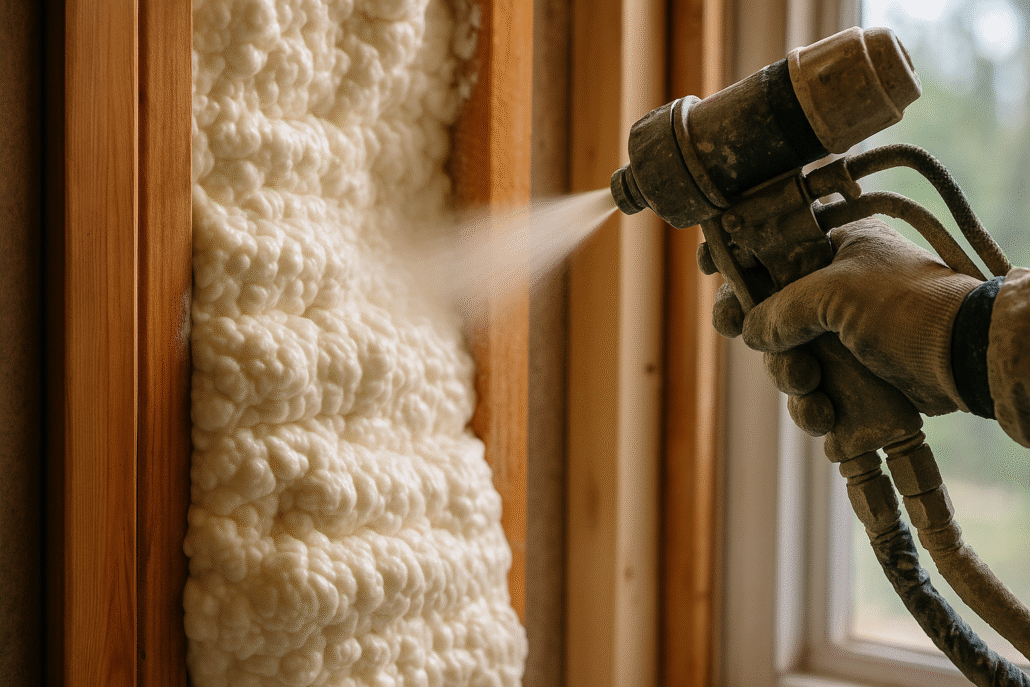
All spray foam basics rely on the isocyanate reaction, a simple chemical process where two liquid components mix and expand. Once sprayed, polyurethane foam quickly forms a rigid, supportive barrier that clings to every surface. This seamless application means fewer air leaks and improved thermal performance compared to traditional insulation products.
A good analogy: Think of baking a cake. You mix ingredients, and it rises in the oven to fill its pan—just like how insulation expands to fill gaps and voids in your building!
Common Challenges with Spray Foam Insulation
While insulation using spray foam offers significant benefits, there are some challenges to keep in mind. One of the biggest hurdles is ensuring proper installation. Poor application can lead to gaps or off-ratio chemicals, which can negatively affect performance.
Moisture sensitivity, choosing the correct foam insulation type, and navigating building codes also require attention. Partnering with a contractor who has experience—like White Knight Contracting, in business since 2011—can make the entire process smoother and more reliable. Homeowners also appreciate the versatility—if your project needs new siding, White Knight Contracting can handle it without a second contractor.
Future Prospects in Insulation
Spray foam basics are evolving rapidly, with R&D focused on improved safety, sustainability, and smart applications. Future polyurethane foams may use more recycled materials or be fully biodegradable, further reducing carbon footprints.
Emerging automation and digital technology are making installs faster and more precise, ensuring each spray achieves optimal insulation. Innovations in isocyanate reaction chemistry are also paving the way for lower emissions and longer-lasting results. For property owners, these advances mean further cost savings, comfort, and peace of mind as energy regulations become even stricter.
Interesting FAQ
Learn best practices for air sealing and insulation retrofits from BC Housing’s comprehensive guide. Having access to expert knowledge ensures every insulation decision is backed by proven strategies and current science.
FAQs
- What is spray foam insulation, and how does it work?
Spray foam insulation uses a mixture of chemicals that combine to create foam, expanding to fill gaps and form an airtight seal through an isocyanate reaction process. It offers superior energy savings compared to many other insulation types. - How does spray foam compare to traditional fiberglass insulation?
Spray foam offers better air sealing, higher R-value per inch, and improved moisture resistance. While it might cost more upfront, the savings and benefits typically outweigh the initial investment in the long term. - Are there risks or health concerns with spray foam basics?
When installed by professionals, risks are minimized. Chemicals are safely contained once cured, but proper ventilation and installation practices are always recommended for safe results. - Can spray foam insulation be used in older homes?
Yes, spray foam basics are ideal for retrofits, sealing up drafts and uneven temperatures. It’s important to work with experienced contractors to avoid moisture issues or ventilation problems in heritage properties.
Conclusion
Understanding spray foam insulation basics helps you select the best approach for energy savings and year-round comfort in your home or business. With choices in foam insulation types and advances in polyurethane foam and isocyanate reaction technologies, there’s never been a better time to upgrade your insulation. For professional spray foam solutions that address all your contracting needs—from insulation to siding—trust a proven local team.
To learn more and view our other blogs, click here.
