
Introduction
If you’re considering a retrofit to maximize your home’s energy performance, retrofit insulation using spray foam could be your ideal home insulation upgrade. At White Knight Contracting, we’ve seen firsthand how spray foam retrofits are revolutionizing older homes and transforming energy-saving renovations for Calgary homeowners.
Table of Contents
- A Brief History of Retrofit Insulation
- Modern Trends in Spray Foam Retrofit
- Challenges of Home Insulation Upgrades
- How Retrofit Insulation Benefits Homes
- Step-by-Step Spray Foam Retrofit Guide
- Comparing Retrofit Insulation Methods
- The Future of Energy Saving Renovation
- Interesting FAQ
- Conclusion
A Brief History of Retrofit Insulation
Retrofit insulation became a focus in the 1970s during the energy crisis, as homeowners began to notice the direct link between their insulation and skyrocketing utility bills. At first, simple materials like fiberglass batts and cellulose were used for basic retrofits. But as energy codes evolved and more research emerged, home insulation upgrades grew more advanced. The spray foam retrofit is a newer solution that has gained major traction in the past decade, allowing for both air sealing and thermal performance in one go. This seamless energy-saving renovation was a game-changer for older homes dealing with drafty walls, attics, or crawlspaces.
Modern Trends in Spray Foam Retrofit
Today’s retrofit insulation trends focus on maximizing efficiency and indoor comfort. Many homeowners are choosing spray foam retrofits because they simultaneously insulate and air-seal gaps that let conditioned air escape.
- Closed-cell spray foam offers the best R-value per inch and resists moisture — key for our Calgary climate.
- Open-cell spray foam provides soundproofing, which is valuable in busy neighborhoods.
- Hybrid insulation systems, blending spray foam with traditional materials, can also be used for specific retrofit challenges.
Another popular trend is integrating smart home tech with energy-saving renovations, letting you monitor energy usage and see the real ROI of your retrofit insulation upgrade.
Challenges of Home Insulation Upgrades
Upgrading retrofit insulation in older homes comes with a few obstacles. For starters, existing wall or attic cavities might be irregular, cramped, or even contain outdated materials like vermiculite insulation. Removing these can take time and careful planning. It’s also essential to properly air-seal before injecting spray foam to avoid moisture issues. But when done right, a quality spray foam retrofit not only bypasses these challenges but can also become the cornerstone of an energy-saving renovation in older homes.
How Retrofit Insulation Benefits Homes
Retrofit insulation upgrades provide more than just lower utility bills. With a spray foam retrofit, you’ll notice:
- Consistent indoor temperatures all year long, with fewer drafts and cold spots.
- Reduced noise transmission and outside allergens.
- Significant energy savings, often cutting heating and cooling costs by up to 50% in some cases.
- Long-term durability as spray foam resists settling, pests, and mold growth.
- Higher resale value — upgraded insulation is a selling point in Calgary’s competitive market.
This makes spray foam retrofit a smart choice for families wanting comfort, health, and savings from their energy-saving renovation.
Step-by-Step Spray Foam Retrofit Guide
Understanding the process makes tackling a retrofit insulation project less daunting. Here’s what a typical spray foam retrofit involves:
- Assessment: An expert reviews your home’s insulation, air leaks, and ventilation.
- Preparation: Outdated insulation is safely removed. Surfaces are cleaned and access points are created.
- Air Sealing: Gaps and cracks in attic floors, rim joists, or wall cavities are sealed.
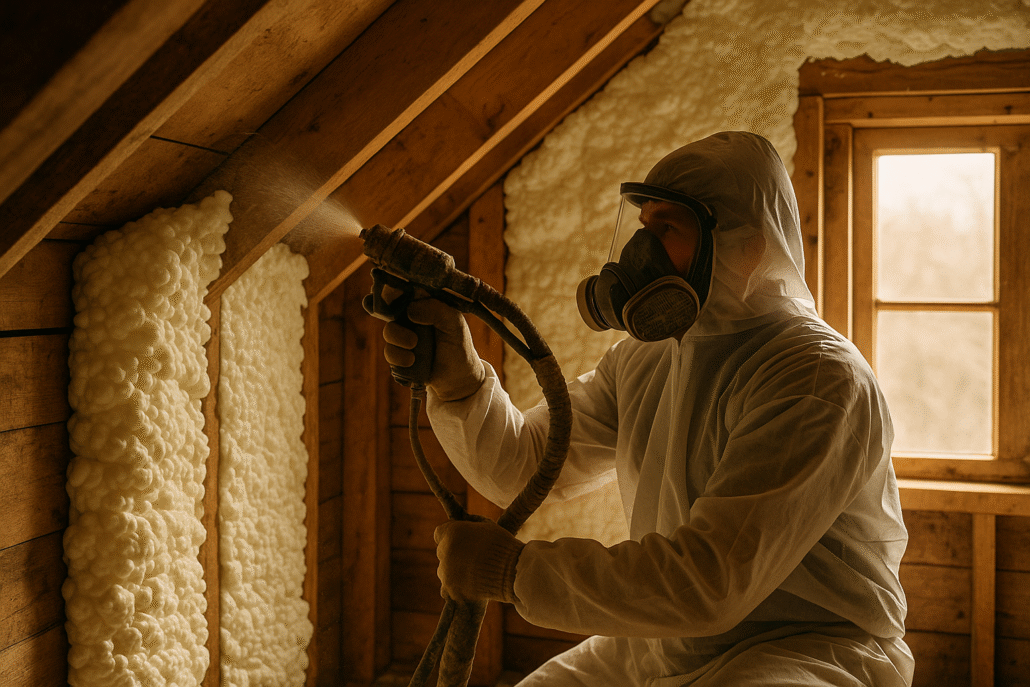
- Application: Spray foam is applied in layers, expanding to fill every nook, sealing as it insulates.
- Finishing: Surfaces are checked for consistency and safety, with any necessary trims completed.
Expect a qualified team to complete a typical home insulation upgrade in one to two days, leaving minimal mess and maximum comfort.
Comparing Retrofit Insulation Methods
Not all retrofit insulation is the same. Traditional options like batting, blown-in cellulose, or rigid foam boards have downsides in older or oddly-shaped homes, often leaving gaps where air leaks persist. Spray foam retrofit, by contrast, adheres directly to every surface and expands to form an airtight, continuous barrier. While the initial cost of spray foam retrofit is higher, its long-term savings and durability usually match or exceed the investment.
- Blown-in fiberglass: Lower upfront cost, but may settle and leave voids over time.
- Rigid foam boards: Good for open areas, but difficult in retrofits without opening up walls.
- Spray foam retrofit: Fills even hidden cracks, boosts structural strength, and delivers unmatched energy efficiency.
The Future of Energy Saving Renovation
As energy prices keep rising and building codes evolve, expert-driven retrofit insulation is only becoming more important for homeowners. Smart materials are arriving, promising even higher R-values and healthier indoor air. The future of energy-saving renovation is likely to see more integration of sensors, automation, and environmentally-friendly spray foam formulas. Homeowners who embrace early retrofit insulation upgrades will enjoy lower bills and greater comfort for years to come. And with a team like White Knight Contracting — in business since 2011 and able to handle siding and other upgrades without the hassle of multiple contractors — a spray foam retrofit is simpler and faster than you think.
Interesting FAQ
Johns Manville provides expert guidance on the proper installation of spray polyurethane foam.
- What’s the difference between a retrofit insulation upgrade and new construction spray foam?
Retrofitting means upgrading an existing building rather than installing insulation in a new build. Spray foam retrofit is tailored to work around finished walls, roofs, or crawlspaces without major demolition. - How long does it take for a spray foam retrofit to pay for itself?
Most Calgary homeowners see a payback within 3-7 years, depending on the scope of the insulation upgrade and energy prices. - Will spray foam retrofit damage my existing walls?
No, professional contractors use minimally invasive methods to inject or spray foam into cavities, leaving finished walls mostly untouched. - Can spray foam retrofits help with uneven heating and cooling?
Yes! By sealing leaks and boosting insulation, retrofitting with spray foam leads to more consistent temperatures throughout your home. - Is spray foam insulation safe?
Absolutely. When professionally installed, it is safe, long-lasting, and improves indoor air quality by reducing drafts and pollen entry.
Conclusion
A retrofit insulation project, especially with a spray foam retrofit, can turn an older, drafty property into a modern, energy-efficient home that saves money each year and feels comfortable every season. To

