
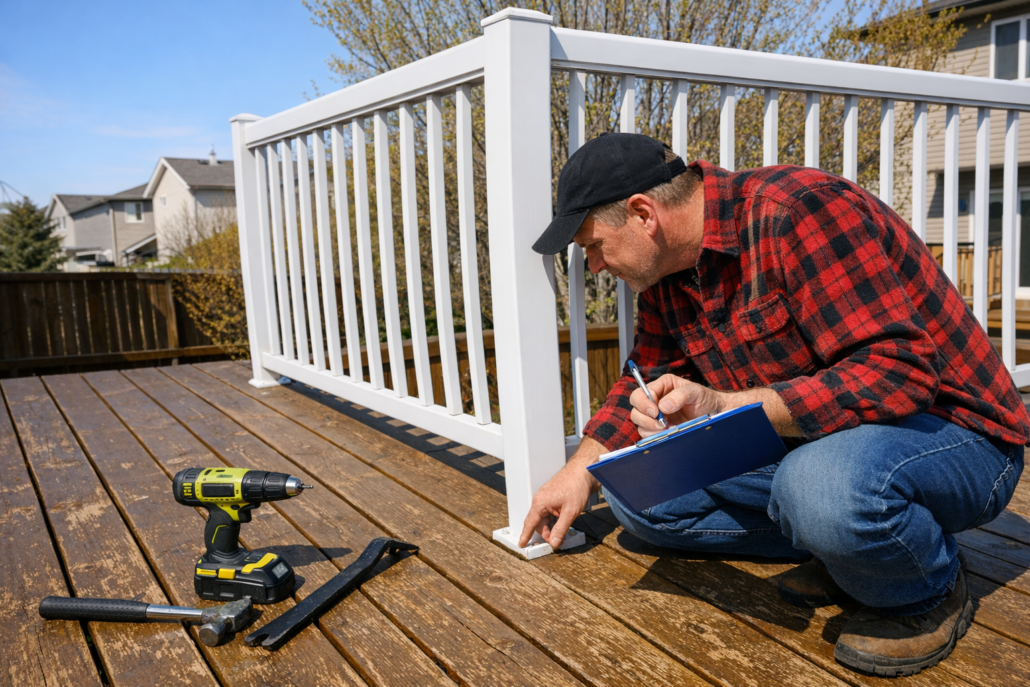
If you’re looking for a spring deck checklist Calgary homeowners can actually use, this guide will help you spot winter damage early and get your space ready for patio season. Calgary’s freeze-thaw swings can loosen fasteners, open tiny cracks, and push water into places it shouldn’t be, so a quick spring check can prevent bigger repairs later. The goal is simple: make the deck safer, sturdier, and easier to maintain all summer. If you find issues you don’t want to tackle alone, White Knight Contracting can help with durable deck surface options and repair-ready planning. Set aside 45–90 minutes for an inspection, plus a separate day for cleaning or sealing if needed. And if you’re unsure what “normal wear” looks like, the steps below will make it clear.
Table of Contents
- Why spring checks matter for Calgary home decks
- Spring deck checklist Calgary: the step-by-step inspection
- Seasonal deck prep: cleaning, sealing, and surface care
- Spring deck repairs: what to fix now vs. later
- Deck maintenance schedule for the rest of the year
- Company Highlight
- FAQ
- Q&A
- Conclusion
Why spring checks matter for Calgary home decks
In Calgary, winter doesn’t just “wear out” a deck—it actively stresses it. Water seeps into small gaps, freezes overnight, expands, and then melts again, which can widen cracks and loosen screws over time. This is why a Calgary deck inspection in spring often finds issues that weren’t visible in fall. Think of it like checking your car after a rough winter: you’re looking for safety problems first, then comfort and appearance second. Also, early spring is when small fixes are cheapest, because damage hasn’t had months of rain and foot traffic to spread. Finally, if you plan to host guests by June, you’ll want repairs done before contractors’ schedules fill up.
Spring deck checklist Calgary: the step-by-step inspection
This spring deck checklist is designed to be practical, not overwhelming. Start at the house connection and work outward so you don’t miss the areas where water causes the most hidden damage. If you’re unsure, take photos as you go—comparing “this year vs. last year” helps you notice change. Keep a notepad and mark items as either “monitor,” “DIY fix,” or “call a pro.” A careful inspection now can prevent a sudden failure later, like a loose railing when someone leans on it. Below are the key items Calgary homeowners should check each spring.
1) Ledger board and flashing (the deck-to-house connection)
The ledger board is the main board that ties the deck to your home. Flashing is the thin protective material that helps keep water from sneaking behind that connection. If flashing is bent, missing, or pulling away, water can rot wood and even affect the home’s rim joist. Look for staining, soft wood, or gaps where caulking has failed. If you see moisture marks inside near the door threshold, treat that as a serious clue. This is one of the most important parts of any Calgary deck inspection.
2) Walking surface: boards, vinyl membrane, and coatings
Walk slowly and feel for bounce, soft spots, or a “spongy” area underfoot. Soft boards can signal rot, especially where snow sat for weeks. If your deck has a coating or membrane, check for cracks, bubbles, peeling edges, or worn-through areas at high-traffic spots like doorways and stairs. Also look for splitting along board ends, since end-grain absorbs water fastest. A simple test is to press gently with a screwdriver tip—solid wood resists, but rotted wood compresses. Catching these early can reduce spring deck repairs later.
3) Fasteners and hardware
Calgary’s freeze-thaw cycles can lift nails and loosen screws, especially on older Calgary home decks. Look for popped fasteners, rust staining, and any missing screws around stair treads and rim boards. Pay attention to joist hangers and brackets; if they’re corroded or bent, that’s a safety concern. If you find a lot of rust, it may mean the wrong type of fastener was used for the material. Hardware is not the “glamorous” part of a deck, but it’s what keeps it together.
4) Railings, posts, and stairs
Give railings a firm shake—if they wobble, they need tightening or rebuilding. Check posts where they meet the deck and where they meet footings, because those spots hold moisture. On stairs, look for sagging stringers, cracked treads, and slippery surfaces. A good analogy is a chair: even if the seat looks fine, a loose leg makes it unsafe. If you have kids, pets, or guests who might lean on railings, treat any movement as urgent. Many spring deck repairs start with “it felt a little loose,” so don’t ignore that feeling.
5) Drainage and airflow underneath
Good drainage is a big part of seasonal deck prep. Clear debris from gaps between boards and remove any leaves trapped along edges. If your deck has enclosed skirting, make sure vents aren’t blocked, because trapped moisture speeds up rot and mold. Look underneath for dark staining, fungal growth, or wet soil right under the ledger line. Also check drainage channels (if your deck design has them) for clogs, since standing water is a long-term destroyer. Even small airflow improvements can extend the life of Calgary home decks.
Seasonal deck prep: cleaning, sealing, and surface care
After you finish the inspection, seasonal deck prep usually comes down to cleaning and protection. Sweep first, then wash with a deck-safe cleaner; avoid extreme pressure washing because it can shred wood fibers and force water into joints. If you plan to stain or seal, wait for a stretch of dry days so moisture doesn’t get trapped under the finish. A quick way to tell if wood is dry enough is the “sprinkle test”: if water beads up, it may still be sealed; if it soaks in evenly, it may be ready for finish (depending on the product). For coated or vinyl surfaces, follow manufacturer guidelines and avoid harsh solvents. The key is consistency—small, regular care beats a big, expensive overhaul every few years.
Spring deck repairs: what to fix now vs. later
Some fixes should happen right away, while others can wait until you have time. Fix immediately: wobbly railings, soft boards, loose stairs, and any flashing problems at the house. These are safety and water-entry risks, and they tend to get worse fast. Repairs that can often wait a few weeks: cosmetic staining, minor surface scuffs, or swapping a few cracked boards if the structure is still solid. In Calgary, late April to mid-May is usually the sweet spot for spring deck repairs—after the worst freeze-thaw cycles end but before peak summer use. If you want contractor availability, booking in March can help you avoid the May and June rush.
Deck maintenance schedule for the rest of the year
A deck maintenance schedule keeps you from having to “start from scratch” every spring. In early summer, re-check fasteners after the deck dries out and wood shrinks slightly. Mid-summer, focus on cleaning and drainage so water doesn’t pool after storms. In fall, do a quick pre-winter walkaround: clear leaves, check caulking lines, and store planters so wet soil isn’t sitting against wood. In winter, try not to chip at ice with sharp tools, because that can gouge surfaces and create entry points for water. This year-round approach makes your next spring deck checklist much faster and usually less expensive.
Company Highlight
White Knight Contracting has been in business since 2011, and that experience matters when you’re dealing with real Calgary weather and real homes. One major advantage is they can handle multiple exterior needs without needing a second contractor, which helps homeowners avoid delays and handoff confusion. For example, if a deck issue connects to siding edges, flashing details, or water run-off points, it’s helpful when one team can look at the full picture. This can also make scheduling simpler, since you’re not trying to line up separate trades during the spring rush. If you’re weighing repair vs. resurfacing, an experienced contractor can explain what’s happening underneath, not just what you see on top. That kind of clarity is what helps you spend money in the right place.
FAQ
As part of a spring deck checklist, homeowners should do an annual inspection for safety issues—Decks.com notes that NADRA recommends examining your deck at least once per year for any decaying or rotting wood. (decks.com)
Q&A
Question: What should Calgary homeowners check on their deck every spring?
Answer: Check for loose or popped fasteners, soft or spongy boards indicating rot, cracked or peeling surfaces, wobbly railings, damaged flashing at the house connection, and clogged drainage channels under the deck.
Question: When is the best time to do deck repairs in Calgary after winter?
Answer: Late April to mid-May is ideal in Calgary — after freeze-thaw cycles end but before peak summer use. Booking a contractor in March ensures availability before the spring rush hits in May and June.
To learn more and view our other blogs, click here,
Conclusion
A smart spring deck checklist Calgary homeowners follow is really about timing and attention to detail. When you check the ledger connection, railings, walking surface, and drainage early, you reduce the chance of surprise problems right when you want to enjoy the outdoors. Just as importantly, you can plan seasonal deck prep and repairs around Calgary’s weather instead of fighting it. If you stick to a simple deck maintenance schedule, each year’s inspection gets faster, and your deck stays safer for family and guests. The best outcome is a deck that feels solid underfoot, drains properly, and looks clean without constant work. Make a few notes, handle the urgent fixes first, and you’ll be ready for the season with a lot less stress.

