
Introduction
If you’re trying to prevent deck rot vinyl is one of the most practical upgrades you can make for a Calgary deck. Our weather swings from warm days to sudden snow, then back to melting and freezing again, and that constant moisture cycle is exactly what wood struggles with most. Even a well-built deck can start showing soft spots, staining, or spongy boards if water keeps getting trapped. That’s why more homeowners are looking at vinyl deck protection as a long-term way to keep water out and reduce ongoing maintenance. White Knight Contracting (https://whiteknightcontracting.com/vinyl) helps homeowners choose options that fit Calgary conditions and handles the project in-house, so you’re not juggling multiple trades. In this post, we’ll walk through what causes rot, what works to stop it, and what you should expect if you’re considering vinyl deck replacement.
Table of Contents
- Why deck rot happens (and why Calgary speeds it up)
- A quick history of deck surfaces: from stain to watertight systems
- Prevent deck rot vinyl: how vinyl systems block moisture
- Comparing options: wood, composite, and rot proof decking approaches
- Common challenges (and how to avoid costly surprises)
- When Calgary deck rot repair is the right first step
- Future prospects: where deck waterproofing is heading
- Company Highlight
- FAQ
- Q&A
- Next steps
- Conclusion
Why deck rot happens (and why Calgary speeds it up)
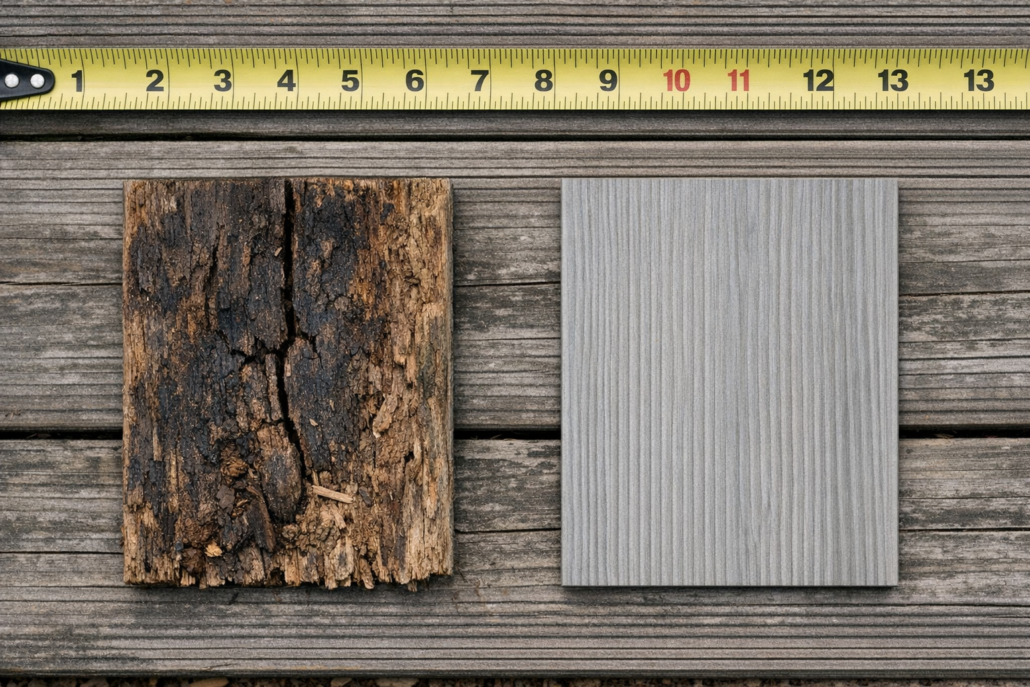
Wood rot is basically a moisture problem that turns into a biology problem. When wood stays wet long enough, fungi can start breaking down the fibers, and the board loses strength over time. A common rule used in building science is that decay risk rises when wood moisture content stays above about 20% for extended periods, especially in shaded areas with limited airflow. Calgary makes this harder because decks often sit under snow cover, then go through snowmelt, then freeze-thaw cycles that push water into tiny cracks and fastener holes. Add in puddling from low spots or clogged drainage edges, and you get the perfect conditions for rot to start from the top down or around ledger connections.
This is why “just re-staining” doesn’t always solve the issue. Stain can help with wood rot prevention, but it doesn’t create a sealed, waterproof surface, and it wears down fastest where you walk the most. If you’re seeing peeling stain, black spotting, soft boards, or fasteners that won’t hold, those are signs the deck may be holding moisture longer than it should.
A quick history of deck surfaces: from stain to watertight systems
For decades, most decks were simply pressure-treated lumber with stain or paint on top. Pressure-treated wood does slow decay, but it’s not the same as being waterproof, and it can still rot where water sits. Over time, homeowners started shifting toward lower-maintenance choices, including composites and PVC boards. More recently, fully waterproof vinyl membranes became popular on second-story decks and walkout decks because they do something stain can’t: they create a continuous water-shedding layer. In other words, they focus on keeping the structure dry instead of repeatedly trying to “refresh” wet wood.
Prevent deck rot vinyl: how vinyl systems block moisture
To prevent deck rot vinyl works by acting like a roof for your deck surface. Instead of letting water slip between boards and land on framing below, a vinyl membrane is designed to shed water toward edges and drains. That means joists and beams spend less time wet, which is the main goal if you want long-term rot proof decking results (or as close as you can realistically get with wood framing).
Vinyl deck protection is especially helpful in Calgary because it reduces the “soak and dry” cycle that causes checking (small cracks), swelling, and fastener loosening. It also makes spring cleanup easier since dirt and debris don’t pack into board gaps the same way. That said, the details matter: good slope, clean seams, properly flashed edges, and correct termination points are what separate a system that lasts from one that leaks.
If you like practical add-ons, joist protection products can also help framing last longer. Installing a vinyl-based waterproof barrier (like joist flashing tape) over deck framing helps block moisture that causes decay and wood rot, extending the life of the structure.
Comparing options: wood, composite, and rot proof decking approaches
There isn’t one “best” surface for every home, so it helps to compare methods based on what fails first: the surface you walk on, or the framing underneath. Here’s a simple way to think about it.
- Traditional wood + stain: Lower upfront cost, but higher ongoing maintenance. Best when the deck gets lots of sun and airflow and you’re willing to recoat regularly for wood rot prevention.
- Composite/PVC boards: Great for reducing surface maintenance, but water still gets through the gaps. You may reduce splinters and refinishing, yet the substructure can still face moisture, especially if drainage is poor.
- Vinyl deck replacement (waterproof membrane): Strong choice when keeping framing dry is the top priority. Also useful for elevated decks where you want a dry space underneath.
In real life, many homeowners choose a hybrid: improve drainage and airflow, protect the joists, and use a waterproof surface where leaks or rot have been recurring problems. If your deck has already had one round of Calgary deck rot repair, moving to a more water-managed surface can be a logical next step.
Common challenges (and how to avoid costly surprises)
The biggest challenge is that rot often hides until you step on a soft spot or pull up a board. Water can get in around rail posts, at door thresholds, and along the ledger where the deck meets the house. Another common issue is “flat” decks that don’t drain well; even a small low area can hold water long enough to start deterioration. Also, DIY patchwork can accidentally trap more moisture, like adding layers without fixing the underlying slope or ventilation.
What to expect if you’re planning an upgrade: a good contractor will check the framing, confirm proper slope for drainage, review how the deck ties into the home, and plan flashing so water can’t sneak behind edges. If you’re aiming to prevent deck rot, it’s worth asking how water exits the deck and where it goes after it drains. That one question can save you from repeating the same problem under a “new” surface.
When Calgary deck rot repair is the right first step
Sometimes, vinyl is the right finish, but repair must come first. If the deck framing is soft, cracked, or sinking, covering it doesn’t solve the structural problem—it hides it. In a common scenario, a homeowner sees surface wear and assumes it’s cosmetic, but the real damage is along the rim joist or around post bases where meltwater collects. That’s when targeted Calgary deck rot repair makes sense: replacing compromised wood, correcting drainage, and reinforcing key areas before installing any new surface.
A simple way to think about it: vinyl can be the raincoat, but the deck still needs a healthy “body” underneath. The best results come when the surface system and the structure are treated as one plan.
Future prospects: where deck waterproofing is heading
Deck products keep improving, but the direction is pretty consistent: better water control, longer service life, and fewer maintenance steps. Expect more integrated systems that combine membranes, edge drains, and pre-formed flashing details that reduce installer guesswork. You’ll also see more homeowners pairing waterproof surfaces with under-deck drainage to create usable patio space below. And because material costs can fluctuate, many people are prioritizing upgrades that protect the framing—because replacing joists and ledger connections is usually more expensive than resurfacing.
Company Highlight
White Knight Contracting has been in business since 2011, and that long track record matters when you’re investing in a system meant to protect your home for years. One big advantage is that they can handle multiple exterior needs in one project—like siding—without needing a second contractor, which helps keep scheduling and accountability simple. For homeowners focused on prevent deck rot planning, that “one team” approach is useful because deck waterproofing often connects to doors, flashing, trim, and other exterior details. In other words, you’re not just buying a surface; you’re coordinating how water moves around your home. If you want a smoother project with fewer handoffs, their all-in-one capability is a real strength.
FAQ
Q&A
Question: Why does wood decking rot so quickly in Calgary’s climate?
Answer: Calgary’s frequent rain, snowmelt, and freeze-thaw cycles trap moisture in wood fibers, accelerating rot and mold growth. Pressure-treated wood slows this process but doesn’t eliminate it — especially under snow cover.
Question: Can I install vinyl decking over a rotting wood deck?
Answer: No rotting substructure must be repaired or replaced before vinyl installation. Installing over rot compromises structural integrity and voids most product warranties. A professional inspection is recommended first.
Next steps
If your goal is to prevent deck rot, start by figuring out where water sits and where it drains—then choose a surface that matches that reality. If you’re deciding between repairs and vinyl deck replacement, plan for an inspection so you’re not building over hidden damage. To learn more and view our other blogs, click here, and compare ideas before you commit to a direction.
Conclusion
Rot is frustrating because it often starts small, then spreads quietly in the spots you don’t see every day. The good news is that you have more choices now than “replace boards and re-stain,” especially if moisture is the real issue. When you prevent deck rot vinyl systems can make a big difference by keeping water from reaching the framing in the first place, while smarter drainage and protective details help the entire structure last longer. If you’re dealing with recurring soft spots, peeling coatings, or ongoing moisture problems, think in terms of water control, not just surface appearance. A deck that sheds water predictably is simply easier to own in a climate like Calgary’s.

