
Introduction
Preventing issues like icedam is crucial when considering spray foam for farm buildings. Whether you’re upgrading barn insulation or looking for smarter agricultural buildings insulation, choosing the best approach matters for your bottom line. White Knight Contracting is a trusted option in the region, with expertise built since 2011, ready to tackle not only spray foam insulation but a range of other needs like siding too.
Table of Contents
- A Brief History of Farm Building Foam Insulation
- Current Trends in Agricultural Buildings Insulation
- Challenges to Consider: Moisture Control and More
- How Spray Foam Works for Barns and Farm Buildings
- Future Prospects for Spray Foam in Agriculture
- Interesting FAQ
- Frequently Asked Questions
- Conclusion
A Brief History of Farm Building Foam Insulation
Spray foam insulation didn’t always exist as a solution for barns and agricultural buildings. Previously, farmers used hay bales, sawdust, or fiberglass to keep buildings warm and reduce moisture. These methods offered basic protection but lacked efficiency and caused problems like icedam build-up on roofs.
By the 1980s, barn insulation began to change as spray foam became commercially available. This innovative material created a tighter seal, keeping warmth in and reducing mold risks from trapped water. From these roots, agricultural buildings insulation evolved into a modern essential for farm structures across Canada.
Current Trends in Agricultural Buildings Insulation
Today, farm building foam is the go-to solution to increase energy savings and reduce maintenance. Modern spray foam is designed to perform well even during harsh Canadian winters. The latest trends focus on:
- Maximizing energy efficiency with high R-values (insulation strength).
- Improving air tightness, stopping drafts and leaks in barns.
- Promoting moisture control in barns, which helps prevent icedam and costly water damage.
- Minimizing pest infestations in agricultural buildings.
As farmers look for resources that protect both animals and equipment, more are choosing spray foam for long-term value, reliability, and comfort.
Challenges to Consider: Moisture Control and More
One major challenge for anyone considering farm building foam is moisture control. Unlike traditional barn insulation, spray foam creates an airtight barrier that blocks outside water and humidity. But if installed incorrectly, spray foam can trap too much humidity, causing its own issues.
- Poorly sealed spaces may allow cold air in, risking icedam.
- Over-insulation can trap interior moisture—ventilation remains important.
- Choosing the wrong insulation type may lead to expensive repairs down the line.
Always work with seasoned contractors who understand agricultural buildings insulation requirements and local weather patterns. This ensures a balance between warmth and healthy airflow.
How Spray Foam Works for Barns and Farm Buildings
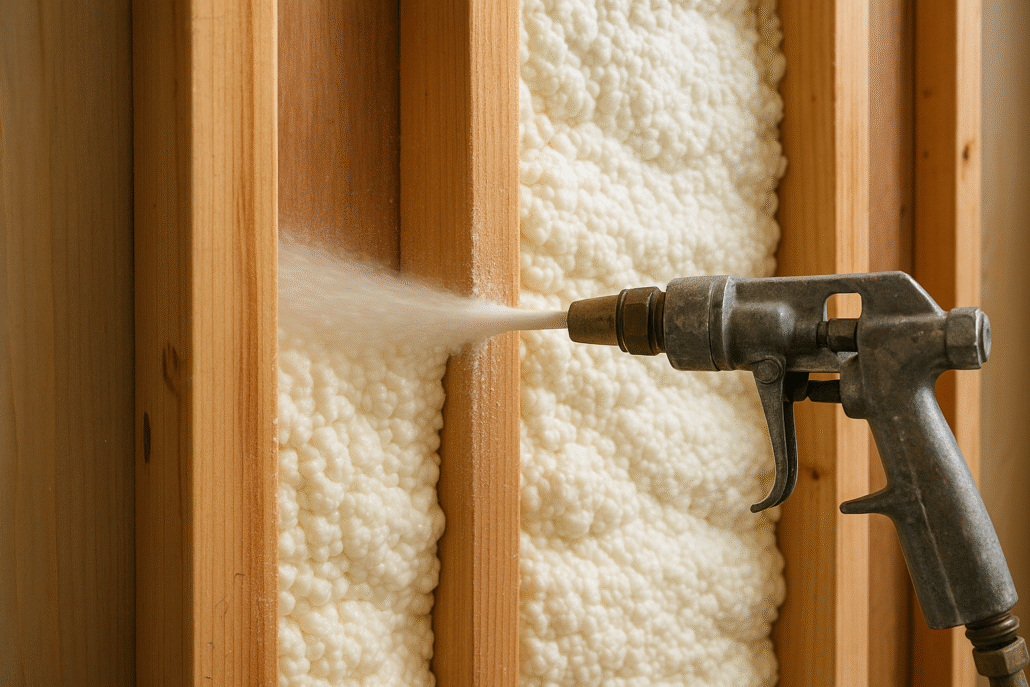
Spray foam insulation is applied as a liquid and quickly expands into every corner of the building. Here’s how it helps:
- Seals cracks and gaps that traditional barn insulation can’t reach.
- Creates a continuous layer of protection against cold, heat, and moisture.
- Helps prevent icedam by blocking warm air leaks that melt snow unevenly on the roof.
There are two main types of spray foam used in farm buildings:
- Closed-cell foam: Offers higher R-values, resists water, and adds structural strength.
- Open-cell foam: Less dense but excellent for soundproofing and interior walls.
This flexible method keeps livestock comfortable, protects valuable machinery, and keeps energy bills manageable.
Future Prospects for Spray Foam in Agriculture
The future of spray foam in agricultural buildings insulation looks impressive. Emerging products now offer improved fire resistance and eco-friendlier formulas. New research suggests spray foam can easily last 30+ years with minimal upkeep.
Farmers are increasingly interested in technologies that not only boost energy savings, but also solve unique rural problems like rodent control and condensation. As farm building foam continues to evolve, experts predict even better durability and easier installation, leading to higher adoption in all types of farm buildings in the next decade. More studies are also underway to improve moisture control barns to further reduce the risk of icedam and mold damage.
Interesting FAQ :
Frequently Asked Questions
- How long does spray foam last in agricultural buildings? Spray foam can last upwards of three decades with proper care, making it a cost-effective farm building foam solution.
- What’s the difference between barn insulation and regular home insulation? Barns often face more severe moisture and temperature swings. Farm building foam is specially formulated for these tough conditions.
- Can spray foam help control odors in farm buildings? Yes! Its airtight seal blocks unwanted smells from escaping or entering barns and outbuildings.
- Is moisture control in barns really that important? Absolutely. Without moisture management, structures can suffer icedam, rot, or disease risks for livestock.
- Do I need a separate contractor for siding and insulation? No. White Knight Contracting can handle both, saving you time and expense.
To learn more and view our other blogs, click here.
Conclusion
Choosing the right agricultural buildings insulation is key to maintaining efficient, healthy farm buildings. Spray foam delivers unmatched performance in energy savings, moisture control barns, and icedam prevention, especially when installed by experienced contractors. Look for a team that understands not just barn insulation, but also long-term moisture control and the realities of farm life.

